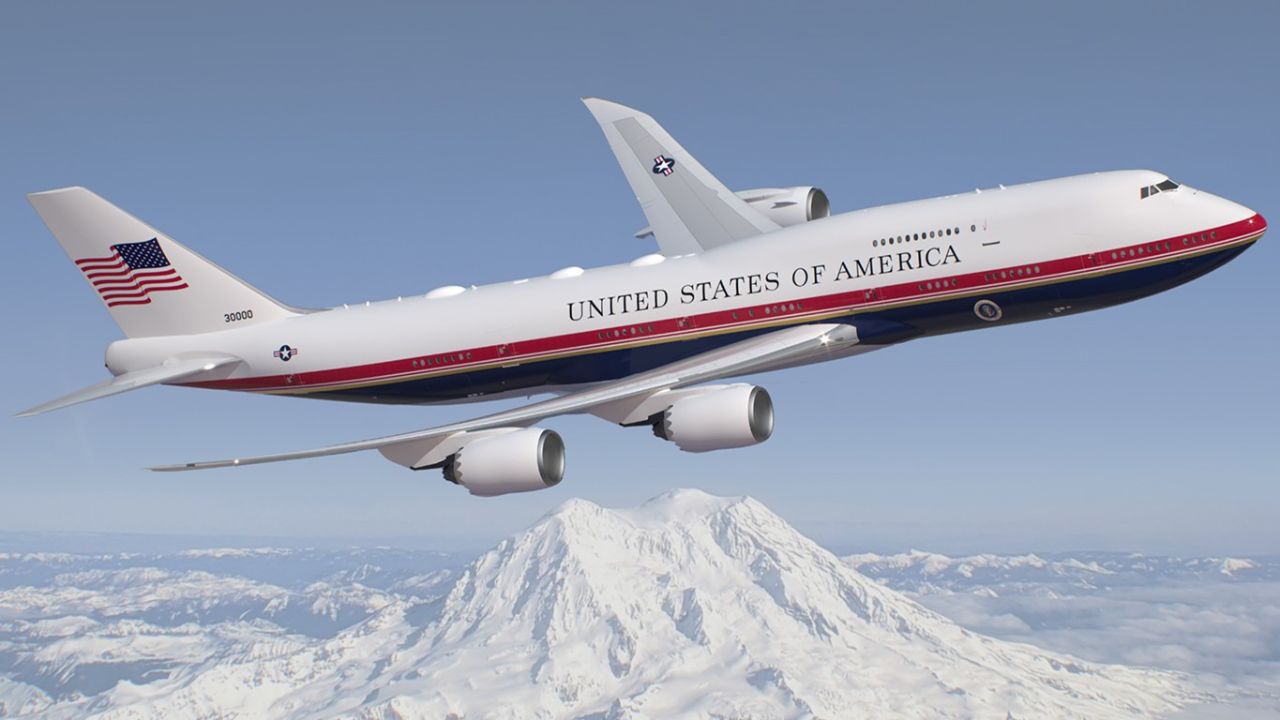
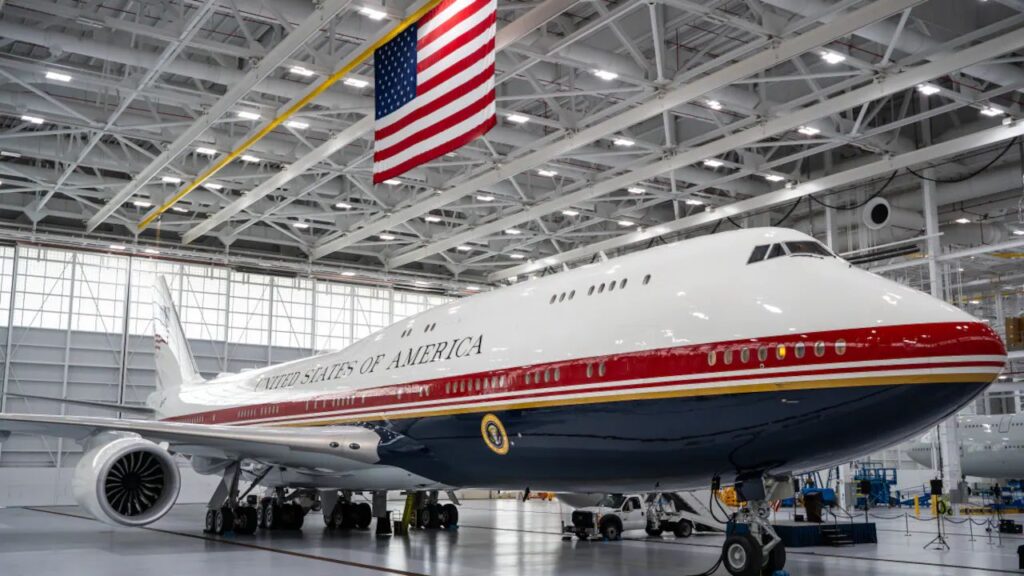
President Donald Trump officially welcomed a new interim presidential aircraft to the fleet on June 19 when the VC-25B Bridge Air Force One touched down at Joint Base Andrews. This modified Boeing 747-8 will serve as the primary executive transport for the remainder of his term while the long delayed purpose built VC-25B program continues. The rapid conversion of the former Qatari royal jet into a secure military platform in just 10 months marks an impressive logistical achievement and provides immediate relief for the aging VC-25A fleet that has served presidents since 1990.
The introduction of this Bridge aircraft reflects ongoing challenges with the next generation presidential fleet. It also highlights the Air Force commitment to maintaining reliable executive airlift capabilities while addressing budget constraints and modernization priorities across multiple programs.
Background On The Bridge Aircraft Acquisition
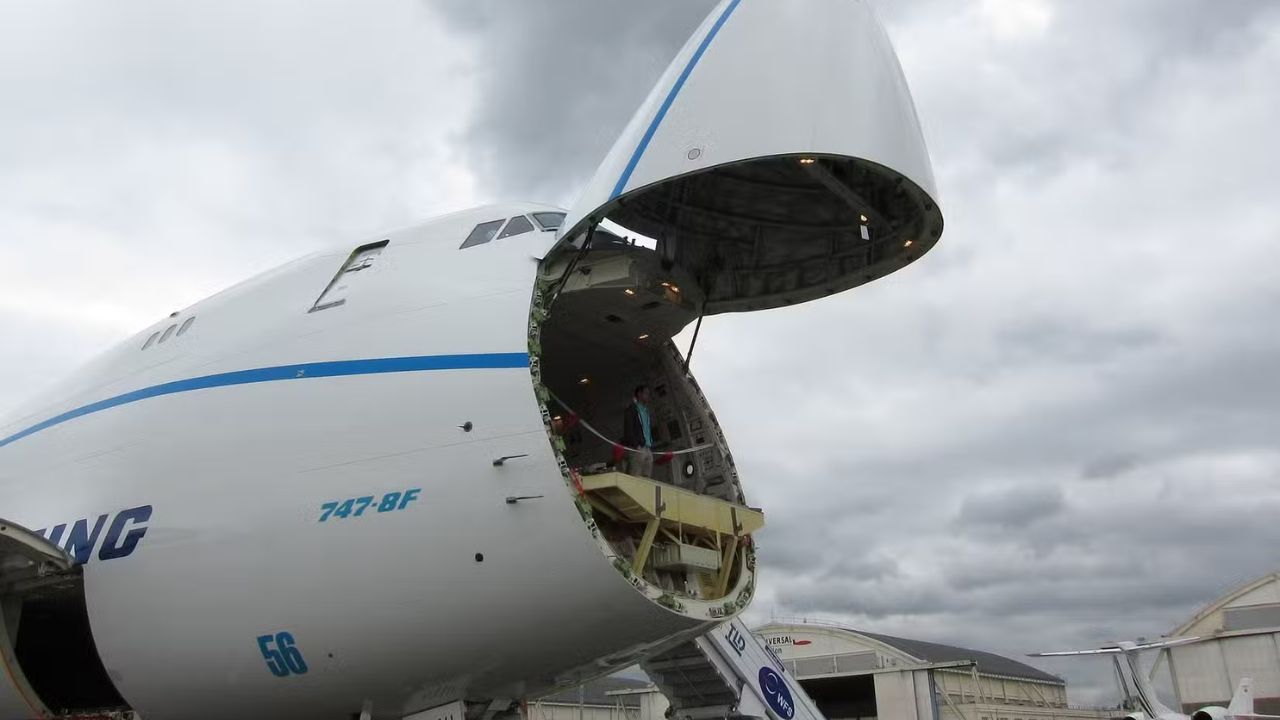
The VC-25B Bridge is based on a Boeing 747-8 originally built in 2012 for the Qatari royal family. The United States government accepted the aircraft in May 2025 as a significant unsolicited foreign gift valued at roughly 400 million dollars. This represents one of the largest such donations ever received by the US government.
Defense contractor L3Harris completed the full transformation in a record 10 months. The process involved stripping large sections of the aircraft down to the wiring for comprehensive security audits to ensure no foreign monitoring devices remained. While the interior retained much of its original luxury configuration the aircraft received necessary military upgrades including secure communications systems defensive countermeasures and presidential support equipment.
Air Force Chief of Staff General Ken Wilsbach praised the effort noting that many doubted the timeline was achievable. The successful delivery demonstrates the United States Air Force ability to execute complex modifications under tight schedules when operational needs demand it.
The legacy VC-25A aircraft will transition to backup roles and support functions within the executive fleet often referred to as Air Force Two. They may still transport the president on occasion but will no longer serve as the primary platform. President Trump has indicated that these historic 747-200 jets will eventually be donated to museums following their retirement around 2029.
Strategic Importance Of The Bridge Solution
The Bridge aircraft provides a critical stopgap while the primary VC-25B program faces continued delays. The original contract signed in 2018 for two purpose built Boeing 747-8 aircraft carries a 3.9 billion dollar fixed price but has encountered significant supply chain and labor challenges. The Air Force continues to invest 1.17 billion dollars over the next five years to complete that program.
By accepting and converting the Qatari jet the Air Force gains an immediate modern platform with greater range efficiency and capacity than the aging VC-25A. The 747-8 airframe offers improved performance and lower operating costs while maintaining the spacious interior necessary for presidential missions that often function as airborne command posts.
This approach allows the military to maintain continuity in executive airlift without interrupting operations. The Bridge aircraft ensures the president and senior government officials have access to a secure reliable platform during a period of global uncertainty and heightened security requirements.
Broader Modernization Of The Executive Airlift Fleet
The VC-25B Bridge forms part of a larger effort to refresh the entire executive airlift fleet. The Air Force plans to acquire 17 new C-37C Gulfstream jets between 2027 and 2031 at an estimated cost of 2.2 billion dollars. These aircraft will support VIP transport for cabinet members and other high level officials.
Additionally the service is exploring replacements for the aging Boeing 737-700 C-40 Clipper fleet. Boeing 737 MAX 9 aircraft are under consideration for this role offering modern efficiency and reliability for shorter executive missions.
These investments reflect the growing demands on executive airlift. Presidential and senior official travel requires specialized aircraft with advanced communications security features and the ability to operate globally on short notice. The Bridge solution buys time for these longer term modernization efforts while addressing immediate capability gaps.
The table below outlines key elements of the current and planned executive airlift fleet.
| Aircraft Type | Role | Status | Notes |
|---|---|---|---|
| VC-25A Boeing 747-200 | Primary presidential transport | Legacy backup | Entering retirement phase |
| VC-25B Bridge 747-8 | Interim presidential transport | Active service 2026 | Converted foreign gift |
| Future VC-25B 747-8 | Permanent presidential transport | In development | Delayed program |
| C-37C Gulfstream | VIP transport | Planned 2027-2031 | 17 aircraft procurement |
| C-40 Clipper 737-700 | Executive transport | Aging fleet | Potential MAX 9 replacement |
This diversification ensures redundancy and specialization across different mission profiles.
Budget Trade-offs And Program Impacts
Funding the accelerated executive airlift modernization required difficult choices. Resources were redirected from other priority programs including the LGM-35A Sentinel intercontinental ballistic missile and the Boeing E-7 Wedgetail airborne early warning aircraft.
The Sentinel program aims to replace the 1970s era Minuteman III missiles but has faced significant cost overruns and delays. Nuclear missile silos also require urgent upgrades highlighting the tension between immediate operational needs and long term strategic modernization.
The E-7 Wedgetail program seeks to replace the decades old E-3 Sentry fleet which suffers from poor readiness rates and obsolete technology. These aircraft provide essential air control during major operations but face sustainability challenges as manufacturers warn that support is becoming increasingly difficult.
Balancing these competing priorities remains challenging for the Air Force. Executive airlift supports the commander in chief and senior leadership making it a non negotiable capability. However diverting funds from nuclear modernization and airborne warning systems carries strategic risks that must be carefully managed.
Operational And Symbolic Significance
The arrival of the Bridge Air Force One carries both practical and symbolic weight. On a practical level it ensures continuity of secure global transport for the president. Symbolically it demonstrates American ingenuity in rapidly adapting available assets to meet critical needs.
The aircraft will serve as a flying embassy and command center capable of maintaining communications and decision making during crises. Its presence reinforces the United States commitment to seamless leadership transition and operational readiness regardless of challenges in long term acquisition programs.
For the crew of the 89th Airlift Wing the transition brings new responsibilities in operating and maintaining the modernized platform. Their expertise ensures that the Bridge aircraft meets the same high standards of safety and reliability expected for presidential missions.
Looking Ahead For Executive Airlift
The VC-25B Bridge represents a temporary measure while the full VC-25B program matures. Once the purpose built aircraft enter service the Bridge jet may transition to secondary roles or serve as a testbed for future technologies.
The broader executive airlift fleet modernization will continue with new Gulfstream and potential Boeing narrowbody acquisitions. These efforts aim to create a more sustainable and capable fleet for decades to come.
As global security challenges evolve the demands on presidential and senior official transport will only increase. Secure communications resilience to threats and the ability to operate from diverse locations remain paramount. The Bridge solution demonstrates the Air Force adaptability in meeting these requirements under constrained timelines.
President Trump personal involvement in inspecting the aircraft underscores the importance placed on executive airlift capabilities. His administration focus on rapid delivery highlights a pragmatic approach to acquisition challenges that have plagued the program for years.
For the American public the new aircraft ensures that the president can continue conducting diplomacy and responding to crises from anywhere in the world. The rapid conversion stands as a testament to the dedication of military personnel contractors and industry partners working together to support national leadership.
As the VC-25B Bridge begins its service it writes a new chapter in the history of presidential aviation. While temporary in nature this aircraft provides essential continuity and capability during a period of significant fleet transition. Its successful integration reinforces the United States ability to maintain robust executive airlift even amid complex acquisition challenges.