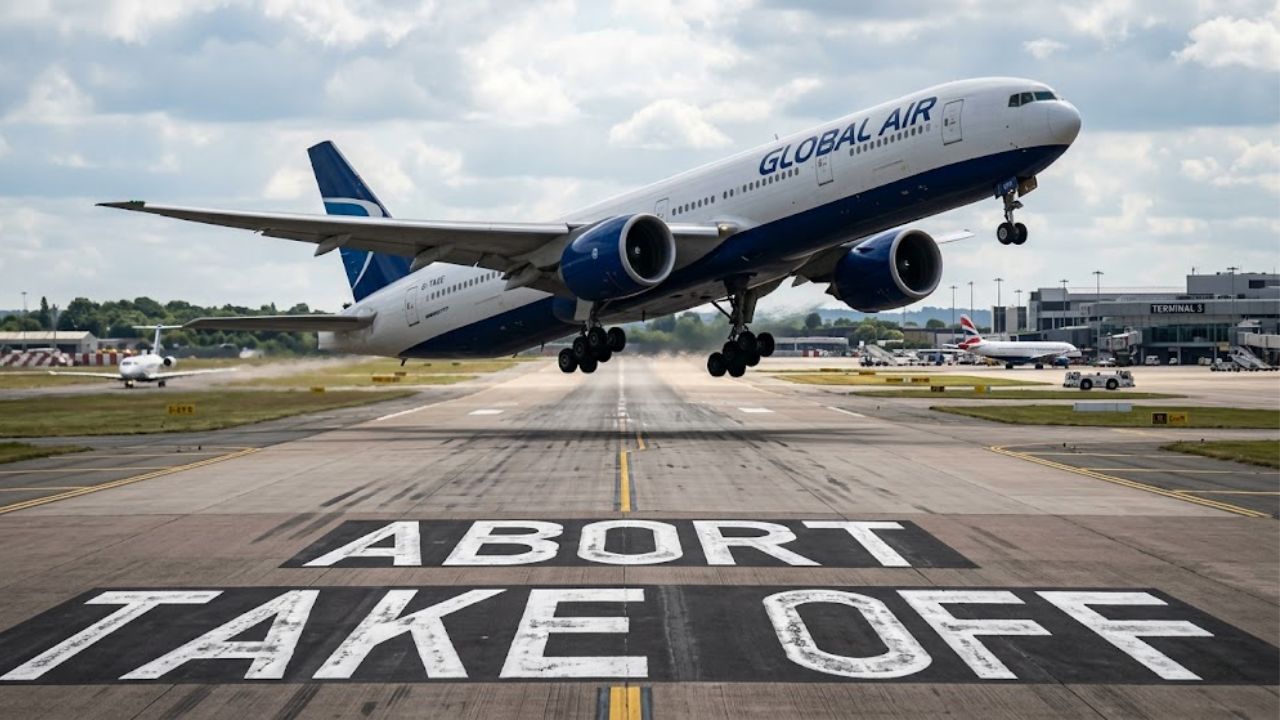
Out of all flight stages, getting off the ground is among the riskiest for big passenger planes. Speed builds fast down the strip, with dangers nearby at every second. During these seconds up front, the crew must spot trouble and respond without delay. When an abort happens, timing between team members becomes everything to halt the moving plane safely.
Pilots spend ages learning how planes respond to air pressure, wind shifts, and engine behavior because every moving part matters. Long before engines fire up, they’ve already walked through worst-case scenarios together. The pre-flight talk sets sharp boundaries defining what counts as safe and what means stop. Clear rules like these cut doubt when seconds matter most, shaping choices under intense pressure.
When and Why Pilots Decide Against Taking Off
Most flights never need one, but still, pilots stay ready just in case. If something seems off while accelerating down the runway, that might mean stopping instead of flying. Warning lights up front could set it off. So might flaps or slats not being where they should be. A shudder through the frame sometimes does it too. Engine trouble often plays a part, and mismatched speed readings on instruments are another reason among others.
Pilots usually split duties. One handles controls while the other watches gauges and backs up steps. Some companies let just the captain decide on a rejected takeoff to keep decisions unchallenged. Authority stays fixed under this setup, no matter which crew member is at the controls.
Most of the time, slow rollouts happen under eighty to one hundred knots. Once past that point, things shift into a faster phase leading up to V1, which is the moment when stopping must be decided. Rolling fast means much more energy built up in the plane. That extra motion pushes braking systems hard, stressing wheels and pads well beyond earlier loads.
Stopping comes first when things go wrong fast. Even then, crews won’t abort unless something drastic happens, like a blaze in the engine or total loss of control. When the plane halts, attention shifts straight to getting people out safely. Help from emergency teams on site is brought in without delay. Only clear dangers like these trigger full rejection of flight.
The Crucial Seconds Before Choices
Just before possibly rejecting takeoff, the plane rapidly approaches V1. With thrust held steady by the pilot in command, eyes stay fixed on the speed readout across the cockpit. Only critical failures justify halting now, so both crew members follow tight rules for high-speed aborts.
Imagine an engine blows just seconds before V1 speed. A warning flashes red while the plane tugs sideways from uneven thrust. At that moment, the decision comes and “Reject” is called out loud. Power drops fast as the flying pilot drags all levers to idle. Should the first officer be handling flight duties, the captain steps in with hands on the yoke and hands on the throttles.
When maximum manual braking kicks in, the autobrake joins by sending strong fluid force through the lines. Spoilers rise as the speedbrake handle moves, shedding lift so more load presses down on the tires. The engine blast shifts direction thanks to reverse thrust, helping slow things faster. With each step, the monitoring pilot speaks up, calling out status updates like “Speedbrakes up” and “Reversers normal,” and then tells the tower about the aborted departure.
Seconds pass before these moves happen, built on hours of practice until they feel automatic. A sudden “V1” breaks the cockpit quiet. Nearing the point of no return, the copilot speaks the word aloud. Right then, the pilot flying lets go of the power controls, with hands shifting to the steering wheel because takeoff is now certain unless already stopped.
Handling What Happens After a Sudden Stop With High Energy
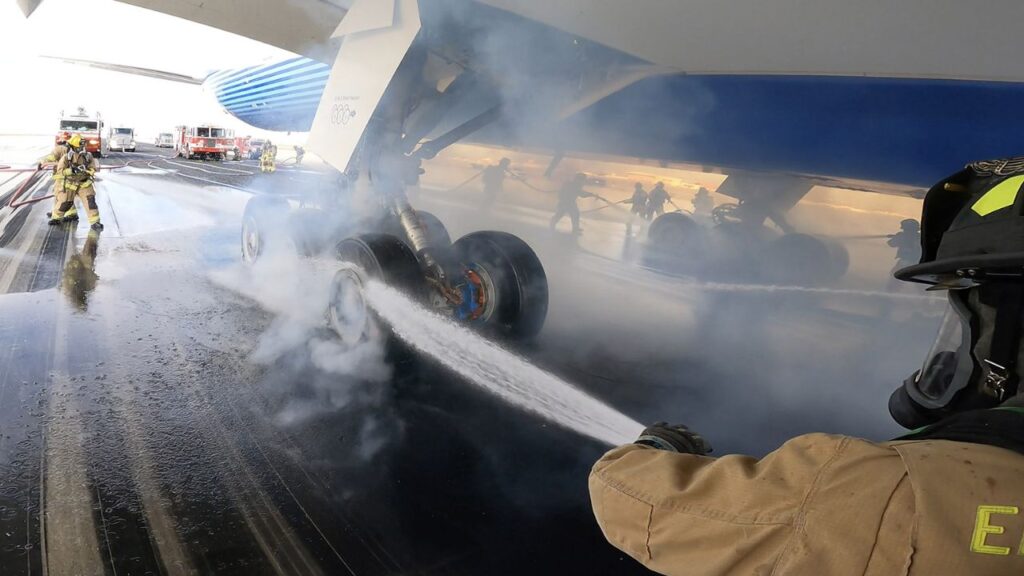
Stopping a large plane just before takeoff pushes huge amounts of motion energy into its braking parts, including tires and wheel systems. Heat builds fast in the brakes, sometimes enough to harm tires or spark flames. During safety trials for jets such as the Boeing 777-9, brake units have neared 2500 degrees Fahrenheit when forced to stop at full intensity.
Stopping well clear of planes and dangers is where the pilot picks to halt. Should it be hot, skipping the parking brake helps prevent parts from sticking together. Usually, the co-pilot talks to control and rescue crews while they scan tires with heat cameras. Gauges inside might lag behind actual temperatures, but eyes outside catch what dials miss. Even when motion ends, warmth keeps rising under the surface for several minutes.
After a high-speed rejected takeoff (RTO), planes usually sit on the tarmac for about sixty minutes. That pause gives hot parts time to cool down. Only then will staff come out to check the aircraft closely. When heat levels go too far or something looks wrong, workers might stop the trip completely. People get off the plane if that happens. The jet could be towed away later for repairs instead of flying.
Ground Support and Technical Inspections
After an RTO, fire crews and technicians step in quickly. Infrared gear helps them check how hot the wheel areas are. To speed things up, strong cooling fans blast air at the brakes. Inside certain planes, electric fans built into the braking system come on when ground workers give the signal. Temperature drops quicker when these systems run together. Safety improves once heat levels settle near normal ranges.
Key inspection steps include:
- Fuse Plug Checks: Each wheel gets a check of its heat-sensitive fuse plugs by technicians. When things get too hot, these plugs are meant to melt so tires let air out without blowing up.
- Component Assessments: If wheels or tires show harm, they usually need swapping. Inspectors look hard at brakes, checking for signs of wear, changes in shape, or fluid seepage.
- Nitrogen Testing: The leftover tires have their nitrogen levels tested to confirm everything holds steady.
Checking flight data means comparing it to what the maker says is safe. When every system passes inspection, only then does someone approve the plane for flying again. What happens at high speeds matters, and stopping fast isn’t taken lightly.
Training For Every Possibility
Pilots train for rejected takeoffs using flight simulators around twice each year. Right when things get tough, which is frequently just shy of V1, instructors trigger system faults. These drills shape quick, instinctive reactions. Following steps matters more than figuring out exactly what went wrong mid-crisis.
Every briefing sharpens the line between go and stop. This line is shaped by how heavy the plane is, how much runway is available, and how the wind and sky behave. When talk turns to threats and mistakes, it is about what could go wrong during takeoff. Words spoken aloud lock in exactly when to quit, whether moving slow or fast. Each person on board hears it the same way. Most planes stay safe because crews train hard before flying. Though stopping a takeoff pushes machines and people to extremes, it shows how each step of checking, acting, and fixing holds things together when trouble hits.
Years of practice squeeze into just two seconds when a crew chooses to abort. When trouble shows up, reaction begins instead of hesitation, with each person moving in sync. Because preparation never stops, actions flow naturally as eyes check instruments, hands respond, and voices confirm steps. Rules already set guide each move so chaos stays outside the cockpit. Decisions come sharp and real, shaped by drills repeated until they feel automatic. Safety wins not through luck but because everyone knows their role cold. Even under pressure, the routine holds firm, especially down the runway where speed changes everything.