The United States Navy maintains one of the most extensive aviation networks in the world. While aircraft carriers often capture public attention as mobile airfields, shore based installations provide the critical infrastructure for training testing maintenance and operational support. Some of these facilities span hundreds of thousands of acres including vast training ranges and restricted airspace that enable realistic preparation for modern naval aviation missions.
This ranking focuses on the largest naval air stations and related aviation facilities by total land area under their control. It includes associated ranges and annexes where they directly support the installation primary aviation mission. From massive desert testing grounds to major fleet readiness bases these sites demonstrate the scale required to sustain American naval airpower. The list highlights both operational hubs and specialized research centers that keep the Navy at the forefront of aviation technology.
Sixth Place NAS Oceana In Virginia
Naval Air Station Oceana covers more than 10000 acres when including its primary facilities and the nearby Dam Neck Annex. Located in Virginia Beach this installation serves as the Navy premier East Coast master jet base. It hosts numerous carrier based strike fighter squadrons and supports the high operational tempo of Atlantic Fleet carrier air wings.
Oceana became the main East Coast fighter base after several other facilities closed during post Cold War reductions. Today nearly every Atlantic Fleet carrier air wing draws squadrons from here. The base runways and support infrastructure are optimized for high performance jet operations. Pilots conduct regular training sorties before deployments while maintenance teams ensure aircraft readiness.
The installation strategic location near major naval commands enhances its importance. It primarily operates Boeing F A 18 E F Super Hornets the Navy versatile strike fighter. This aircraft handles air superiority strike close air support reconnaissance and aerial refueling missions. Oceana role in maintaining combat readiness makes it essential for global power projection.
Fifth Place NAS Patuxent River In Maryland
Naval Air Station Patuxent River occupies more than 14500 acres along the shores of the Chesapeake Bay. Known as Pax River this facility serves as the headquarters of Naval Air Systems Command and functions as the Navy primary aviation research and development center.
Pax River has tested nearly every modern naval aircraft from the F 35 Lightning II to advanced unmanned systems. Its specialized facilities and extensive restricted airspace over the Chesapeake allow engineers and test pilots to evaluate performance avionics sensors and weapons in controlled conditions. The combination of technical expertise dedicated ranges and proximity to Washington makes it a hub of naval aviation innovation.
The installation hosts test squadrons operating a variety of platforms including F 35s P 8A Poseidons CMV 22B Ospreys and MQ 25 Stingrays. Its mission focuses on determining how future systems will perform before fleet introduction. This role distinguishes Pax River from operational bases and cements its technological significance.
Fourth Place NAS Lemoore In California
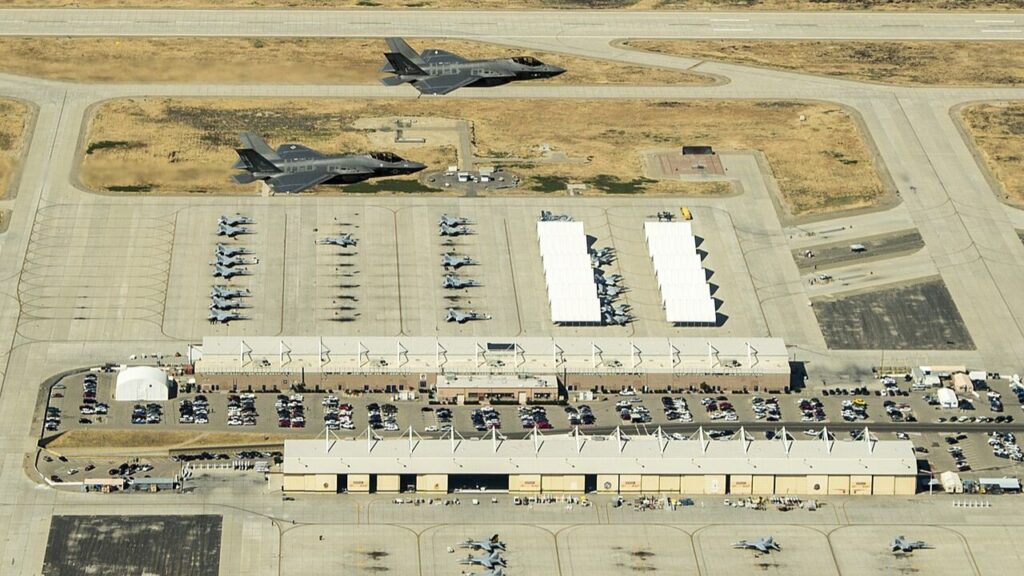
Naval Air Station Lemoore spans approximately 29800 acres in California Central Valley. Established in 1961 it was built to support carrier based jet aviation and remains the Navy primary West Coast master jet base.
Lemoore hosts the majority of Pacific Fleet carrier strike fighter squadrons. Aircraft from here deploy aboard carriers operating across the Pacific making the installation vital for American naval strategy in the region. It supports both operational units and replacement squadrons that train new aviators.
The base location far from dense population centers provides unrestricted airspace and room for expansion. Its infrastructure includes multiple runways maintenance facilities and support services capable of sustaining dozens of frontline squadrons. Lemoore serves as the main West Coast hub for F A 18 E F Super Hornets and F 35C Lightning IIs with more than 200 fighters based there.
Third Place NAS Whidbey Island In Washington
Naval Air Station Whidbey Island controls over 55000 acres when including associated training properties. Situated in Washington Puget Sound region the installation is the home of the Navy EA 18G Growler electronic attack community.
Electronic warfare plays a growing role in modern conflicts and Whidbey Island stands at the center of that mission. The EA 18G Growler derived from the Super Hornet disrupts enemy radar communications and air defenses while supporting strike operations. Nearly every Growler squadron operates from here including the fleet replacement squadron that trains new crews.
The base expansive footprint includes operational airfields support facilities and training areas suited for electronic warfare exercises. Its Pacific Northwest location offers access to large training airspace while remaining near major naval commands. As emphasis on contested electromagnetic environments increases Whidbey Island strategic value continues to rise.
Second Place NAS Fallon In Nevada
Naval Air Station Fallon together with its associated Fallon Range Training Complex covers more than 240000 acres in the Nevada desert. This makes it one of the largest and most important aviation training facilities in the world.
Fallon hosts the Naval Aviation Warfighting Development Center which includes the renowned TOPGUN program. The center trains entire carrier air wings integrating fighters electronic attack aircraft early warning platforms and helicopters in realistic combat scenarios. Its vast desert ranges allow practice of air to air combat precision strikes electronic warfare and large force exercises.
The installation benefits from more than 300 flyable days per year and one of the longest runways in the Navy. It regularly hosts diverse aircraft during exercises including Super Hornets Growlers Hawkeyes and helicopters. Fallon adversary aircraft simulate enemy threats creating highly realistic training. This combination of assets prepares aircrews for real world operations.
First Place NAWS China Lake In California
Naval Air Weapons Station China Lake stands as the largest naval aviation installation with more than 1.1 million acres under its control. Located in the Mojave Desert it ranks as the Navy largest single landholding anywhere.
Established during World War II China Lake serves as the primary site for weapons development and testing. It supports the Naval Air Warfare Center Weapons Division and has contributed to countless missiles bombs rockets and aviation technologies used by Navy and Marine Corps aircraft.
The installation immense size includes nearly 20000 square miles of restricted airspace. This allows live fire testing and weapons evaluation impossible elsewhere. Many current Navy weapons including Sidewinder variants were developed or refined at China Lake. The facility operates test aircraft and specialized units evaluating new systems in realistic conditions.
The table below ranks the six largest US naval air stations by land area.
| Rank | Installation | Location | Land Area (Acres) | Primary Role |
|---|---|---|---|---|
| 1 | NAWS China Lake | California | 1,100,000+ | Weapons testing and development |
| 2 | NAS Fallon | Nevada | 240,000+ | Advanced combat training |
| 3 | NAS Whidbey Island | Washington | 55,000+ | Electronic attack operations |
| 4 | NAS Lemoore | California | 29,800 | Carrier strike fighter operations |
| 5 | NAS Patuxent River | Maryland | 14,500+ | Research testing and evaluation |
| 6 | NAS Oceana | Virginia | 10,000+ | East Coast master jet base |
These installations illustrate the vast infrastructure supporting American naval aviation. From weapons innovation at China Lake to fleet readiness at Oceana each contributes uniquely to maintaining global maritime superiority. Their combined scale underscores the resources required to train develop and operate one of the world most advanced air arms. As technology evolves these bases will continue adapting to meet future challenges while preserving the Navy ability to project power from the sea.