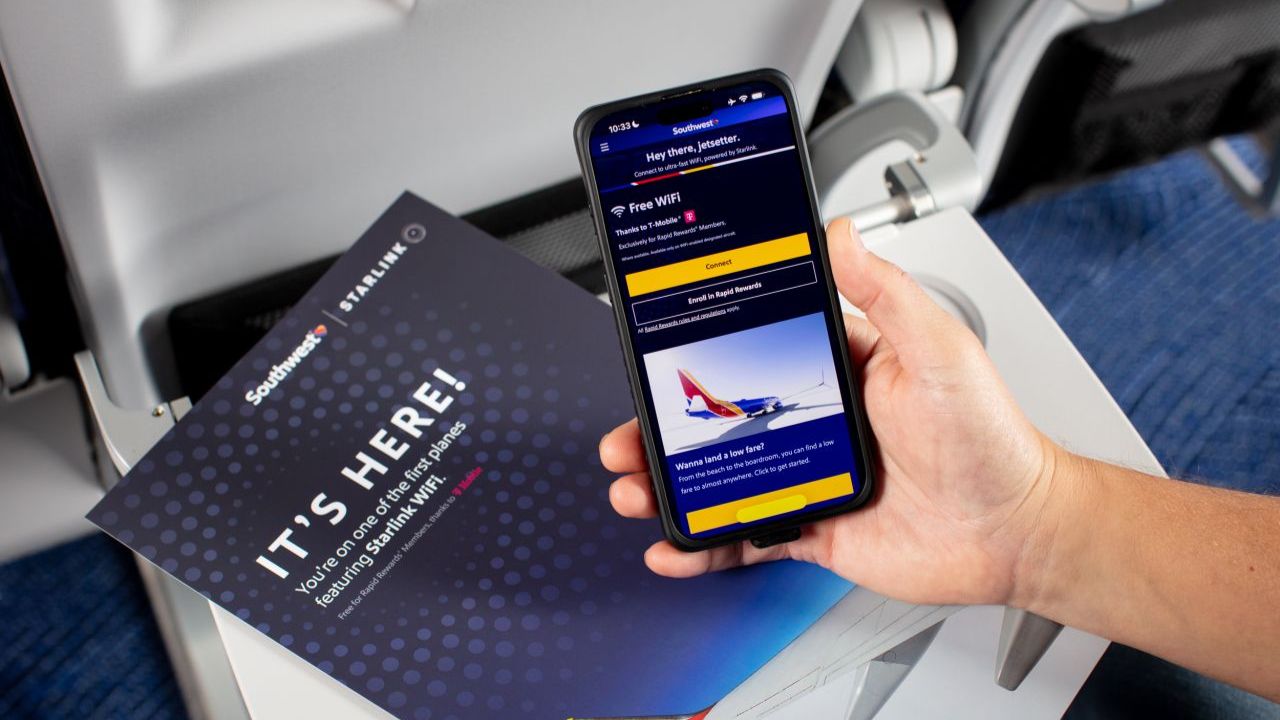
Southwest Airlines achieved a significant milestone in in-flight connectivity on June 22, 2026, when its first Starlink-equipped Boeing 737-800 took to the skies. The aircraft, registered N8543Z, departed from Dallas Love Field (DAL) bound for Albuquerque International Sunport (ABQ), marking the debut of SpaceX’s Starlink high-speed satellite internet service on a Southwest flight. This launch represents the initial step in a major fleetwide upgrade that aims to equip more than 300 aircraft with the technology by the end of 2026.
The introduction of Starlink comes as Southwest continues to enhance its passenger experience following the recent decision to make Wi-Fi free for Rapid Rewards members across its fleet. The new system promises substantially improved performance over previous providers, enabling seamless streaming, video calls, cloud-based work, and even online gaming at cruising altitude.
A New Era of In-Flight Connectivity
Tony Roach, Southwest’s Chief Customer and Brand Officer, highlighted the significance of the launch: “Starlink delivers a new era of inflight connectivity to Southwest. Starting with this first aircraft, we will be rapidly integrating Starlink into our fleet this year. This ultra-fast WiFi brings an at-home experience to the air.” The airline bills the service as delivering reliable, high-speed internet comparable to what passengers enjoy at home or in the office.
For Rapid Rewards members, access to the Starlink Wi-Fi remains complimentary, aligning with Southwest’s broader strategy of rewarding loyalty. Non-members can purchase access for a flat fee of $8 per device per flight. This model differentiates Southwest slightly from some other U.S. carriers offering Starlink, where free access is sometimes extended to all passengers regardless of status.
Passengers on N8543Z and subsequent equipped aircraft can expect to stream 4K content, participate in video calls, and engage in data-intensive activities with minimal lag. Starlink’s low-latency performance is particularly notable, supporting real-time applications that were challenging on older satellite systems.
Technical Advantages of Starlink’s Low Earth Orbit Network
The superior performance stems from Starlink’s constellation of thousands of small satellites in low Earth orbit (LEO), typically between 211 and 348 miles (340 to 560 km) above the surface. This is dramatically closer than traditional geostationary satellites, which orbit approximately 22,000 miles (35,000 km) away. The reduced distance results in stronger signals, lower latency (often 20-40 milliseconds), and higher throughput.
Download speeds on Starlink-equipped aircraft can range from 50 to over 250 Mbps, with uploads between 24 and 37 Mbps – representing improvements of three to 15 times (or more) compared to legacy systems like Viasat or Anuvu. This enables every passenger on a full 737 to stream simultaneously without significant degradation.
Unlike older systems that often required aircraft to reach higher altitudes before connecting, Starlink provides coverage from gate to gate, including on the ground. This continuous connectivity is a major benefit for passengers who want to stay online during taxi, takeoff, and landing phases where permitted.
Performance Comparison: Starlink vs. Legacy Systems
| Metric | Starlink | Legacy (e.g., Viasat/Anuvu) |
|---|---|---|
| Download Speeds | 50–250+ Mbps | 12–100 Mbps |
| Upload Speeds | 24–37 Mbps | Significantly lower |
| Latency | 20–40 ms | Higher |
| Coverage | Gate-to-gate | Often altitude-restricted |
| Simultaneous Users | Full aircraft capacity | More limited |
Rollout Plans and Fleet Integration
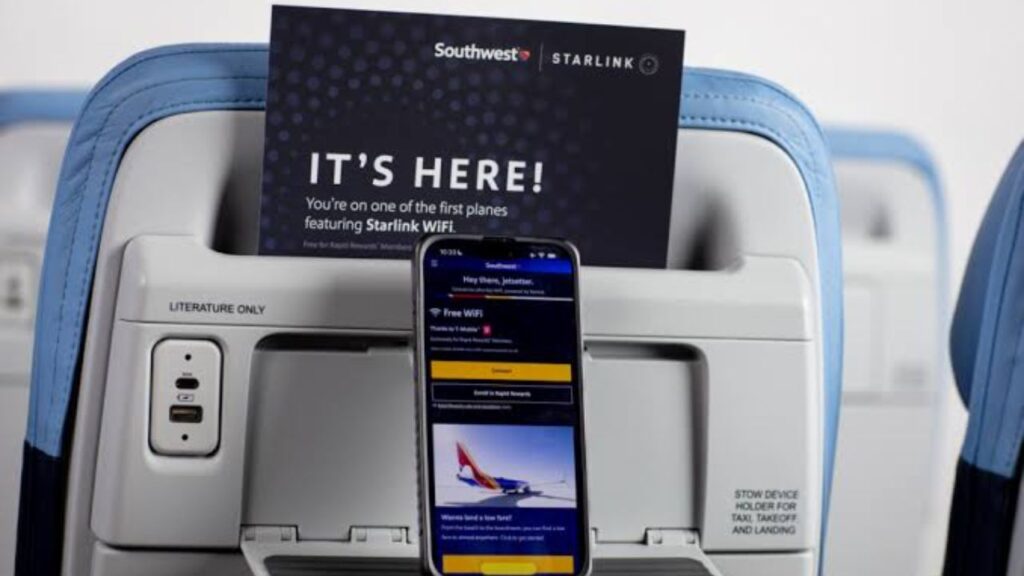
Southwest plans an aggressive installation schedule, focusing initially on aircraft equipped with older Wi-Fi hardware from Anuvu. The goal is to have more than 300 Boeing 737s – roughly a significant portion of the fleet – Starlink-enabled by December 31, 2026. This rapid pace underscores the airline’s commitment to modernizing its connectivity offerings across its all-Boeing 737 network.
Aircraft not yet retrofitted will continue operating with existing Viasat or Anuvu systems, where Rapid Rewards members still receive free unlimited access. As installations progress, Southwest expects a noticeable improvement in overall customer satisfaction with in-flight Wi-Fi.
The airline joins a growing list of U.S. carriers adopting Starlink, including Hawaiian Airlines (which offers it free to all passengers) and others like United and Alaska. Southwest’s partnership with T-Mobile further integrates the service into its loyalty ecosystem.
Impact on Passengers and Operations
For business travelers, the upgrade means reliable access to cloud documents, video conferencing, and productivity tools without pre-downloading materials. Leisure passengers can stream live sports, movies in high definition, or stay connected on social media throughout the journey. The low latency particularly benefits families with children who want to game online or make video calls.
Southwest’s all-737 fleet simplifies the technical integration, as the Starlink antenna and hardware can be standardized across the aircraft type. Installation focuses on minimal disruption to operations, with retrofits occurring during routine maintenance windows where possible.
Early feedback from the inaugural flight has been positive, with passengers noting the seamless experience and impressive speeds. Tracking tools on the Southwest website and apps allow customers to identify Starlink-equipped flights, building excitement for the broader rollout.
Broader Industry Context
Southwest’s move reflects a wider industry shift toward satellite-based connectivity as passenger expectations for reliable internet grow. Competitors are also investing heavily, with varying models for access and pricing. The technology’s ability to deliver consistent performance at scale positions it as a game-changer for narrowbody operations, where long-haul widebodies previously held an edge in premium amenities.
For Southwest, which operates one of the largest domestic networks, enhanced Wi-Fi supports its point-to-point model by making shorter flights more productive and enjoyable. It also strengthens the Rapid Rewards program as a key differentiator.
Future Outlook
As installations accelerate through the remainder of 2026, Southwest anticipates equipping a substantial portion of its fleet. Full fleet coverage remains a longer-term objective, but the initial target of 300+ aircraft will bring the “at-home” internet experience to millions of passengers annually.
Challenges such as regulatory approvals for certain phases of flight and ongoing optimization of the system will continue, but the successful debut of N8543Z signals strong momentum. Boeing and SpaceX collaboration ensures the hardware integrates well with the 737 platform.
This launch not only elevates Southwest’s competitive position but also sets a benchmark for reliable, high-speed connectivity in the low-cost carrier segment. As more aircraft join the Starlink-equipped fleet, passengers can look forward to fewer frustrations with spotty connections and more opportunities to make the most of their time in the air. The initiative aligns with Southwest’s ongoing evolution, including fleet modernization and customer-focused enhancements, reinforcing its position as a major U.S. carrier committed to innovation in passenger experience.