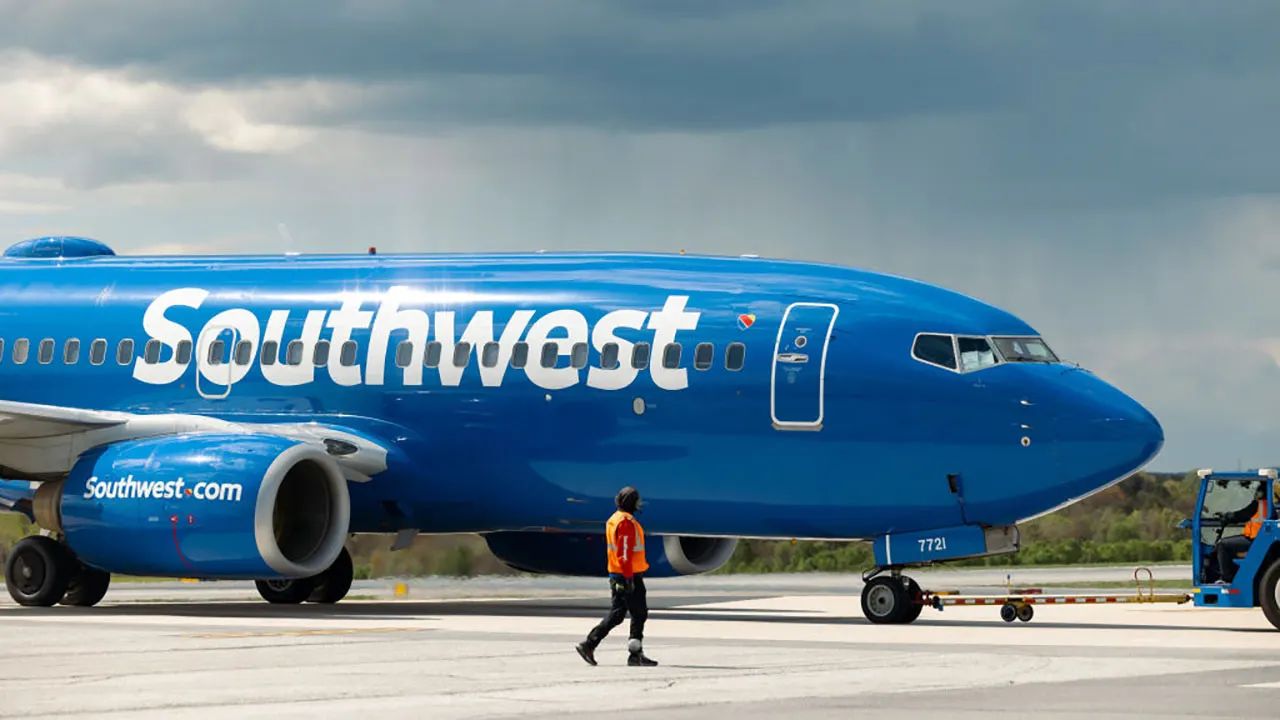
On Sunday, June 21, 2026, an unusual ground handling incident at Memphis International Airport (MEM) disrupted operations for Southwest Airlines and highlighted the complexities of ramp safety at busy U.S. airports. A ground equipment vehicle, believed to be a belt loader, became wedged beneath the belly of a Southwest c during passenger boarding, forcing the aircraft out of service and delaying travelers.
Emergency crews, including airport fire services, local police, and paramedics, responded promptly to the scene. Videos shared by witnesses showed the vehicle in contact with the underside of the aircraft, prompting a swift safety response. No injuries were reported among passengers, crew, or ground personnel, but the incident underscored ongoing challenges in coordinating aircraft movements with ground support equipment on the tarmac.
Incident Details and Immediate Response
The affected flight was Southwest WN4013, operating from Memphis to Las Vegas Harry Reid International Airport (LAS). According to Southwest Airlines, the ground equipment vehicle made contact with the aircraft during the boarding process. The airline’s official statement confirmed: “Southwest Flight 4013 was contacted by a ground equipment vehicle during boarding today at Memphis International Airport. The aircraft was taken out of service and an alternate plane operated the route to Dallas. We have no reports of passenger injuries and the event will be investigated through our comprehensive Safety Management System. Nothing is more important to Southwest than the Safety of its Customers and Employees.”
The aircraft involved, registration N436WN, had arrived earlier that day from Houston Hobby Airport (HOU) on a short domestic leg. It was preparing for the continuation to Las Vegas when the incident occurred. The 737-700 sustained damage from the wedged vehicle, primarily appearing to involve the rear underside or belly area, though specific structural details have not been publicly released pending full inspection.
Passengers were safely deplaned or held as needed while emergency responders assessed the situation. The Memphis Shelby County Airport Authority described it as an “isolated incident” and confirmed that airport operations continued normally without broader disruptions.
Aircraft Profile: N436WN
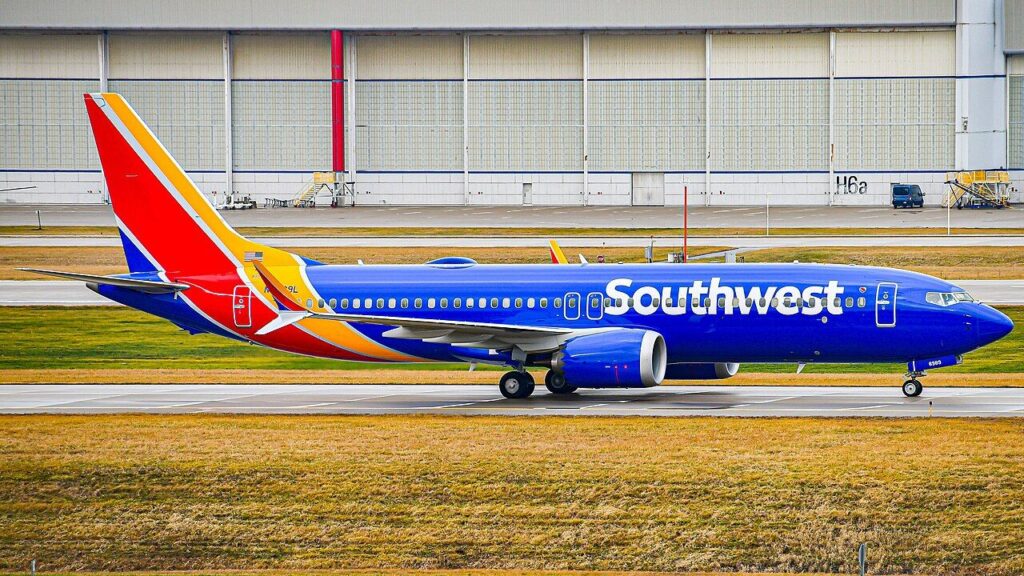
The aircraft at the center of the event is a veteran of Southwest’s fleet. Delivered in June 2003, N436WN is a Boeing 737-7H4 with serial number (MSN) 32456 (often referenced in some databases with line number context around 1342 in certain tracking). It features an all-economy configuration seating 143 passengers and carries Southwest’s fleet number 436. Its hex code is A53B69.
Key Aircraft Specifications:
| Attribute | Details |
|---|---|
| Registration | N436WN |
| Manufacturer | Boeing |
| Model | 737-7H4 (737-700) |
| Serial Number (MSN) | 32456 |
| Delivery Date | June 2003 |
| Configuration | 143 Economy Seats |
| Operator Fleet Number | 436 |
| Age (as of June 2026) | Approximately 23 years |
This aircraft is part of Southwest’s substantial 737-700 fleet, which forms a core component of the airline’s operations. Following the incident, N436WN was declared safe for a non-revenue ferry flight and was moved to Cecil Airport (VQQ) near Jacksonville, Florida, for detailed inspection, maintenance, and any necessary repairs. The timeline for its return to active service remains unclear.
Southwest’s Fleet Context
Southwest Airlines operates the world’s largest fleet of Boeing 737 aircraft, relying almost exclusively on the type for its point-to-point network. As of late 2025 and into 2026, the airline’s fleet totals over 800 aircraft, with the 737-700 variant numbering around 290-305 units in active or near-active status. These are gradually being phased out in favor of newer 737 MAX models, with full transition targeted by 2031.
The 737-700 has been a workhorse for Southwest since the airline was the launch customer for the variant. It offers a balance of efficiency, range suitable for domestic U.S. routes, and compatibility with the airline’s high-frequency operations. N436WN’s age aligns with many in the fleet that are approaching or have reached the typical retirement window for narrowbody aircraft in intensive service.
Southwest’s fleet breakdown (approximate recent figures) includes:
- Boeing 737-700: ~294-305 aircraft (137 seats typical)
- Boeing 737-800: ~196 aircraft (175 seats)
- Boeing 737 MAX 8: Significant and growing numbers
This single-type strategy has historically provided Southwest with maintenance and training efficiencies, though it also means any widespread issues or individual aircraft groundings can ripple through the schedule.
Impact on Passengers and Operations
The incident caused a significant delay for passengers on WN4013. The flight, originally scheduled to depart Memphis at 12:25 PM, pushed back around 3:25 PM after passengers were reaccommodated onto a replacement aircraft. Arrival in Las Vegas occurred at approximately 5:36 PM instead of the planned 1:50 PM, resulting in nearly a three-hour delay for those onboard.
Southwest worked to minimize inconvenience by arranging the substitute aircraft, ultimately routing through or to Dallas in some reports before completing the journey. No cancellations were ultimately necessary for this specific flight, though the original aircraft’s removal from service likely affected subsequent rotations.
At Memphis International Airport, Southwest holds a substantial market position as the second-largest carrier by passenger share (approximately 18%), behind Delta Air Lines (21%). The airline serves a robust network from MEM, including year-round flights to destinations such as Baltimore, Chicago Midway, Dallas Love Field, Denver, Houston Hobby, Las Vegas, Nashville, Orlando, and Phoenix, with seasonal additions like Tampa. A new year-round route to Austin is scheduled to begin on October 1, 2026.
The Memphis-Las Vegas route sees competition from ultra-low-cost carriers Allegiant Air and Frontier Airlines. Bureau of Transportation Statistics data indicates that the three airlines collectively transported about 87,150 passengers on the route across 2025. Delays like this one, while disruptive, are part of the operational realities at mid-sized hubs where ramp congestion and ground equipment movements are frequent.
Broader Implications for Ramp Safety
Ground collisions and equipment strikes, though relatively rare in terms of severity, occur periodically across the industry due to the tight spaces and high tempo of operations at airports. Belt loaders, used for loading baggage and cargo, require precise maneuvering near aircraft fuselages and wings. Factors such as visibility, communication between ground crews and flight decks, and adherence to standard operating procedures play critical roles in prevention.
Southwest emphasized that the event will undergo a thorough review via its Safety Management System (SMS), a proactive framework required by regulators to identify hazards and implement mitigations. The FAA and NTSB may also take interest depending on the extent of damage and any systemic findings, though no immediate regulatory actions have been announced.
This incident comes amid Southwest’s ongoing fleet modernization and efforts to maintain high dispatch reliability. The airline has faced scrutiny in recent years over various operational challenges, including scheduling disruptions and safety-related events, making transparent investigation and swift repairs essential for maintaining passenger confidence.
Looking Ahead
As of the latest available information, N436WN remains at Cecil Airport for evaluation. Cecil (VQQ) serves as a maintenance facility for Southwest and other operators, offering the space and resources for thorough structural checks that might not be feasible at a line station like Memphis.
For passengers affected, Southwest typically provides compensation or goodwill gestures in line with its customer service policies, though specifics for this event were not detailed publicly. The replacement aircraft successfully transported travelers to their destination, limiting the overall network impact.
Incidents like this serve as reminders of the intricate ballet performed daily on airport ramps. Ground crews, pilots, and dispatchers coordinate thousands of movements to keep flights on time, but human and mechanical factors can occasionally intersect unexpectedly. Southwest’s commitment to investigating through its SMS aligns with industry best practices aimed at continuous improvement in safety.
In the competitive low-cost carrier space, reliability remains a key differentiator. Southwest’s large 737 fleet provides flexibility in deploying spares, as demonstrated here, but also places a premium on rapid turnaround for affected aircraft. As the airline progresses with its MAX integration and retires older -700s, maintaining the airworthiness of legacy jets like N436WN will be crucial to seamless operations.
This event, while inconvenient for those heading to Las Vegas, concluded without harm to people, a positive outcome in an industry where safety is paramount. Further updates on the aircraft’s repair status and any investigative findings will likely emerge in the coming weeks.