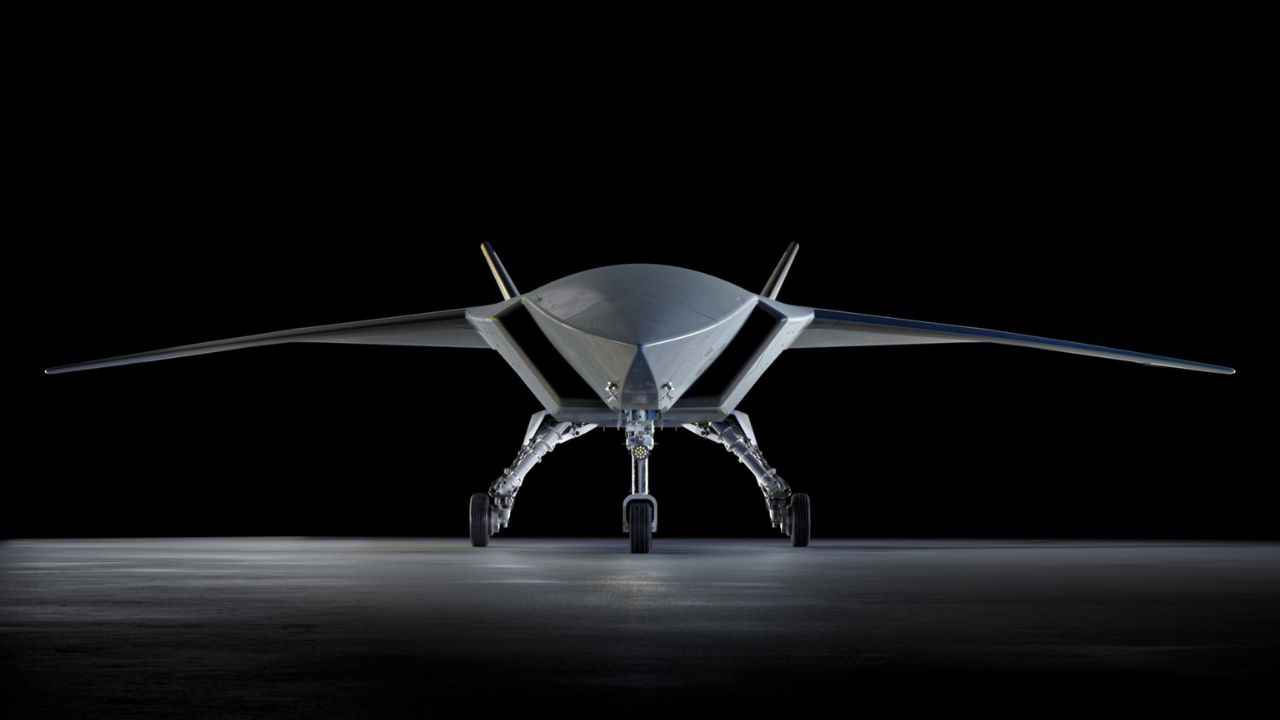
Boeing Australia MQ-28 Ghost Bat has emerged as a serious contender in the United States Air Force future uncrewed aircraft plans despite not winning the initial Collaborative Combat Aircraft Increment 1 contract. The loyal wingman drone designed originally for the Royal Australian Air Force brings proven flight experience advanced autonomy and growing international interest that position it well for later increments of the program. Its recent test flights in the United States and strong development progress demonstrate why the Ghost Bat has effectively gatecrashed ongoing discussions about the next wave of collaborative combat aircraft.
The Collaborative Combat Aircraft program represents a cornerstone of American airpower strategy for the 2030s and beyond. These uncrewed systems will operate alongside manned fighters like the F-47 and bombers such as the B-21 Raider extending sensor reach conducting strikes and performing high risk missions while keeping pilots out of the most dangerous airspace. Boeing continued refining the MQ-28 even after losing the first contract round creating a mature platform that could fill specific roles in a future family of collaborative drones.
Understanding The Collaborative Combat Aircraft Program
The Air Force Collaborative Combat Aircraft initiative aims to field affordable attritable uncrewed aircraft that team with manned platforms. Increment 1 focused on rapid development of basic capabilities with General Atomics and Anduril selected as winners. These aircraft prioritize speed to fielding over full optimization for peer conflicts.
Increment 2 will address more demanding requirements including greater range payload survivability electrical power and long term sustainment. This phase represents the real engineering challenge where platforms must prove effective against sophisticated adversaries in the vast distances of the Indo Pacific theater. The Air Force has indicated that future collaborative combat aircraft should support a combat radius of at least 700 nautical miles while working seamlessly with high end manned aircraft.
This evolution from minimum viable capability to fully capable systems creates opportunities for platforms like the MQ-28 that bring more mature development experience. Boeing pitched the Ghost Bat for Increment 1 but has used the time since to advance the design through extensive testing and capability demonstrations.
The MQ-28 Ghost Bat Development And Capabilities
Boeing Australia began work on the MQ-28 in 2017 with first flight achieved in 2021. The aircraft has now completed over 150 flights including demonstrations of autonomous operations and teaming with manned platforms. Recent test activity in the United States has validated its ability to support advanced uncrewed aircraft development and autonomy efforts.
The Ghost Bat measures 38 feet in length and features a stealthy design optimized for collaborative missions. Boeing advertises a ferry range of 2000 nautical miles though realistic combat radius is lower while still potentially meeting Air Force requirements for extended operations. The platform is designed to escort high value assets like the E-7 Wedgetail airborne early warning aircraft conduct electronic warfare and support strike missions as part of a networked force.
A key strength lies in its development maturity. Unlike some conceptual designs the MQ-28 has flown extensively and demonstrated real world performance. The Royal Australian Air Force has already received eight pre-production Block 1 aircraft providing valuable operational feedback. This head start in flight testing and system integration gives Boeing a practical advantage as the Air Force looks beyond initial Increment 1 platforms.
Why The Ghost Bat Appeals For Future Increments
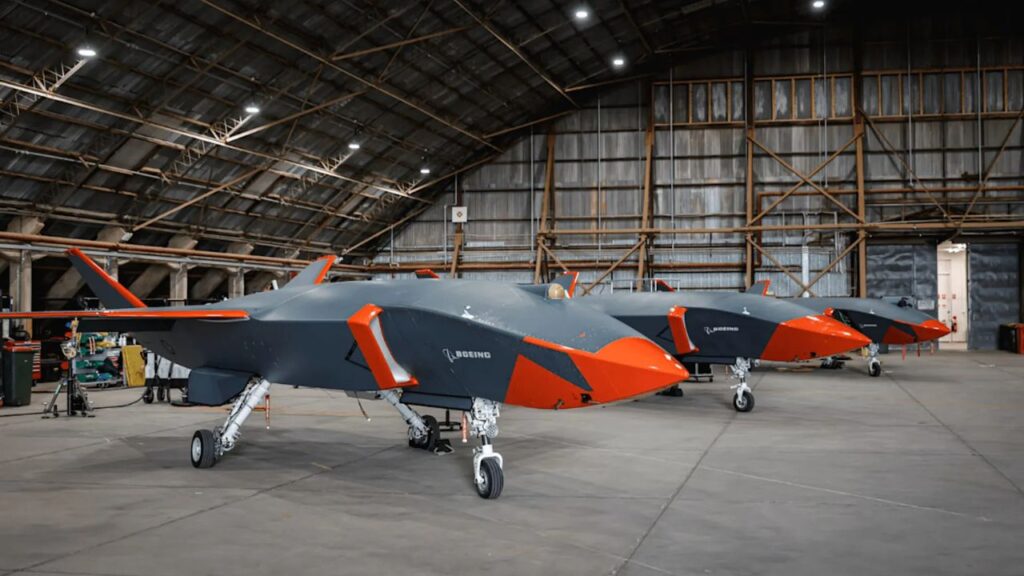
The Air Force vision for collaborative combat aircraft includes a family of systems rather than a single universal design. Different missions will require different capabilities from low cost attritable platforms for high risk tasks to more capable systems that operate alongside premium manned aircraft. The MQ-28 fits naturally into this family as a mid tier option with proven autonomy and sensor capabilities.
Its design emphasizes interoperability with platforms already operated by the United States and allies including F-35s F/A-18s and E-7 aircraft. This commonality reduces integration challenges and supports coalition operations. Boeing has also positioned the Ghost Bat for export markets with interest from several nations seeking loyal wingman solutions.
Recent demonstrations have shown the aircraft teaming multiple MQ-28s with manned platforms to conduct simulated missions against airborne targets. Boeing has also validated stealth performance enhancements that improve its survivability in contested environments. These capabilities align well with Increment 2 priorities around range survivability and networking.
The table below compares basic public attributes of leading collaborative combat aircraft contenders.
| Platform | Developer | First Flight | Status | Key Strengths |
|---|---|---|---|---|
| MQ-28 Ghost Bat | Boeing Australia | 2021 | Over 150 flights operational testing | Maturity autonomy export potential |
| YFQ-42 | General Atomics | Recent | Increment 1 winner | Cost effectiveness rapid development |
| YFQ-44 | Anduril | Recent | Increment 1 winner | Affordable attritable design |
| YFQ-48A Talon Blue | Northrop Grumman | In testing | Redesigned for Increment 2 | Reduced weight faster production |
This comparison shows the Ghost Bat competitive position through its advanced development cycle and demonstrated performance.
Advantages Over Newer Conceptual Designs
Several competitors remain in earlier stages. Lockheed Martin Vectis and Shield AI X-Bat are still largely conceptual with limited flight data available. Hermeus focuses on high speed capabilities but its platforms are not yet representative of final collaborative combat aircraft designs. The MQ-28 maturity gives Boeing credibility when discussing integration timelines and risk reduction for the Air Force.
International interest further strengthens its position. The United Kingdom Japan and Germany have all shown openness to the platform while European programs explore similar loyal wingman concepts. Boeing partnerships for potential export versions expand the aircraft industrial base and could drive down costs through larger production runs.
The Ghost Bat also benefits from Boeing broader experience with uncrewed systems including the MQ-25 Stingray carrier based tanker. Lessons from that program inform Ghost Bat development particularly around autonomy and carrier operations if the Navy pursues similar capabilities.
Challenges And The Path Forward
Despite its strengths the MQ-28 faces competition in a crowded field. The Air Force has multiple vendors developing options for Increment 2 and beyond with each bringing different strengths in cost stealth or payload. Boeing must continue proving the Ghost Bat value through additional testing and capability demonstrations.
Questions remain about exact performance metrics including real world combat radius in contested environments. The Air Force will evaluate all contenders against strict requirements for survivability payload and integration with manned platforms like the F-47.
Boeing strategy of continued investment despite not winning Increment 1 has kept the program viable. The company uses Australian operations and United States testing to mature systems while awaiting further opportunities in future program phases.
The Broader Context Of Collaborative Combat Aircraft Development
The collaborative combat aircraft concept reflects changing realities of modern air warfare. High end manned fighters like the F-47 are too valuable to risk in every mission. Uncrewed systems can perform dangerous tasks extend sensor coverage and overwhelm adversaries through numbers and coordination.
This approach requires robust autonomy secure networking and flexible mission packages. Programs like the MQ-28 contribute to solving these challenges through practical flight experience rather than paper concepts. As the Air Force refines its requirements the Ghost Bat real world data will help inform decisions about which capabilities matter most.
International cooperation adds another dimension. Allies seek compatible systems for joint operations. The MQ-28 potential to serve multiple nations could create standardization benefits similar to the F-35 program but at lower cost and with faster timelines.
What Comes Next For The MQ-28 And CCA Programs
Boeing continues advancing the Ghost Bat with additional flight testing and capability enhancements. The platform may find roles in Air Force future increments particularly where maturity and interoperability provide advantages. The Navy has also expressed interest in similar collaborative systems creating potential cross service opportunities.
The Air Force decision on Increment 1 winners expected in September 2026 will shape near term development but longer term plans remain open to additional vendors. Boeing positioning of the MQ-28 as a technology feeder and risk reduction tool keeps it relevant even if not selected as the primary platform.
For observers the Ghost Bat story illustrates how persistent development and practical testing can overcome initial setbacks in complex defense programs. As collaborative combat aircraft move from concept to operational reality platforms with proven flight hours will hold distinct advantages.
The MQ-28 Ghost Bat has earned its place in discussions about the future of American and allied airpower. Its entry into United States testing and ongoing maturation demonstrate Boeing commitment to this critical capability area. Whether as a primary platform or valuable contributor the Ghost Bat represents meaningful progress toward the networked uncrewed systems that will define air combat in the coming decades.