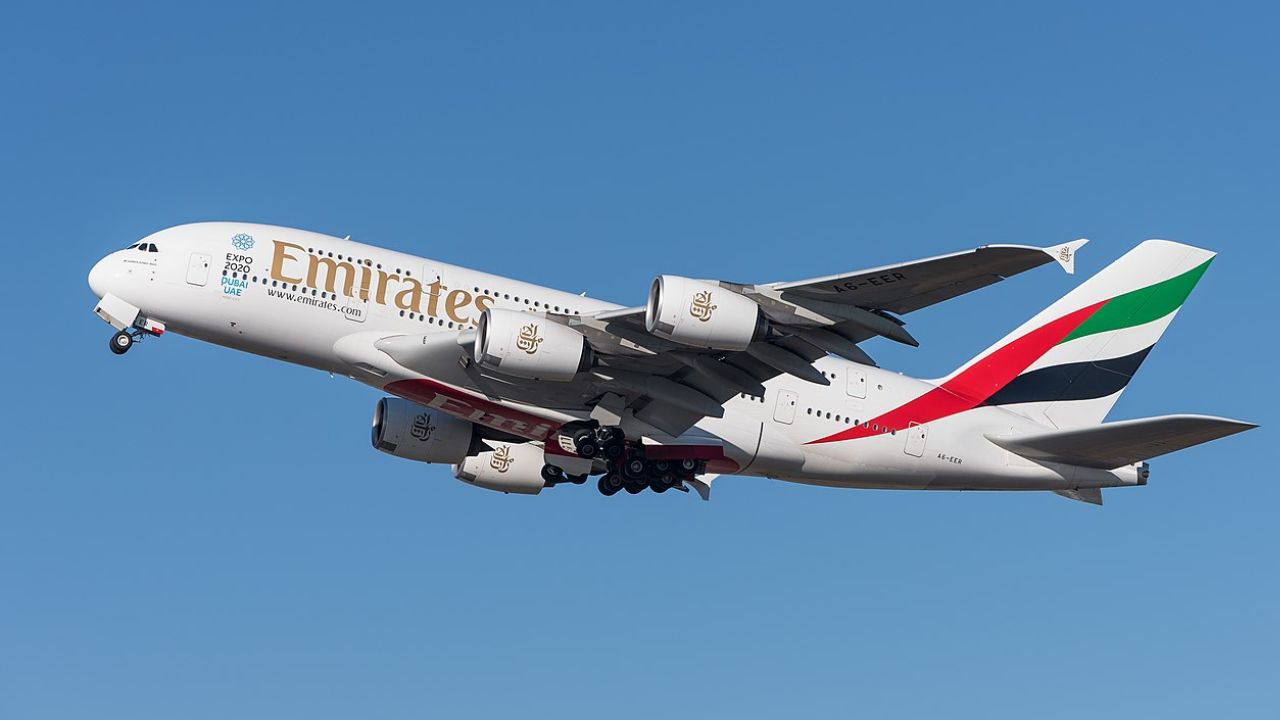
The Airbus A380 is frequently viewed as a symbol of aviation ambition that did not fully meet commercial expectations for many operators. Yet for Emirates, the superjumbo remains a highly profitable asset that continues to play a central role in the airline long haul strategy. The key to its success lies in a deliberate revenue model where a relatively small number of premium seats generate a disproportionately large share of income. On many flights roughly 15 percent of the seats in first and business class contribute around 45 to 50 percent of total passenger revenue. This approach transforms the A380 from a simple capacity machine into a sophisticated revenue generator that balances volume with high yield.
Emirates operates the largest A380 fleet in the world and has invested billions in retrofitting these aircraft to maximize earnings. By optimizing the cabin mix and focusing on premium experiences the airline ensures that every flight contributes meaningfully to profitability even on competitive routes. Understanding how this works reveals why the A380 continues to make financial sense for Emirates while others have retired the type.
The Revenue Pyramid Built Into Every A380 Flight
Emirates structures its A380 cabins to appeal to different customer segments at different price points. This creates a layered revenue structure where economy provides the foundation of volume while premium cabins deliver the majority of profits. On flagship routes such as Dubai to London or New York round trip economy fares typically range from 700 to 1000 dollars. Business class tickets often sell for 3000 to 6000 dollars and first class can exceed 8000 dollars sometimes reaching 15000 or more for the most exclusive experiences.
This pricing spread allows the airline to monetize the same journey in multiple ways. Economy passengers fill the bulk of seats and help maintain strong load factors. They spread fixed operating costs across hundreds of travelers making the flight viable even when premium demand fluctuates. However the real financial strength comes from the upper decks where first and business class passengers pay significantly higher fares for enhanced comfort and service.
Industry estimates consistently show that first and business class together account for 45 to 50 percent of passenger revenue despite comprising only about 15 percent of total seats. This imbalance highlights the effectiveness of Emirates yield management strategy. By allocating space efficiently the airline captures substantial income from a relatively small number of high paying customers while using economy to ensure the aircraft flies full.
The table below illustrates a typical revenue contribution breakdown on a busy A380 route based on industry benchmarks and Emirates reported performance patterns.
| Cabin Class | Approximate Share Of Seats | Typical Round Trip Fare Range | Estimated Revenue Contribution |
|---|---|---|---|
| First Class | 2 to 4 percent | 8000 to 15000 dollars | 15 to 20 percent |
| Business Class | 12 to 13 percent | 3000 to 6000 dollars | 30 to 35 percent |
| Premium Economy | 10 to 15 percent | 1500 to 3000 dollars | 15 to 20 percent |
| Economy | 70 to 75 percent | 700 to 1000 dollars | 30 to 35 percent |
These figures demonstrate how premium cabins drive profitability while economy ensures scale. The model works because Emirates carefully controls inventory and adjusts pricing dynamically based on demand.
Why Business Class Serves As The Primary Profit Driver

While first class generates headlines and brand prestige business class functions as the true financial engine on the A380. Emirates typically configures 70 to 76 business class seats on its superjumbos creating a large pool of high yield inventory. These seats command fares three to six times higher than economy without consuming as much space as full first class suites.
Business class appeals to a broad audience including corporate travelers affluent leisure passengers and loyalty program members. This wider demand base allows Emirates to maintain strong occupancy rates while charging premium prices. The cabin design balances comfort with density enabling the airline to generate significant revenue per square foot. Upgrades partner redemptions and corporate contracts further boost utilization making business class exceptionally efficient.
In contrast first class requires far more space per passenger. Each suite occupies the equivalent of two or three business class seats meaning the airline must earn substantially more per passenger to justify the allocation. Emirates achieves this on select routes where willingness to pay is highest. The cabin also serves a marketing purpose reinforcing the airline luxury image across its entire network.
The Growing Role Of Premium Economy
Premium economy has emerged as one of the smartest uses of space on the A380. Positioned between economy and business it targets travelers seeking extra comfort without the full business class price. Seats in this cabin typically sell for two to three times the cost of standard economy while requiring only about 1.4 times the floor space.
This favorable yield to density ratio makes premium economy highly attractive. Emirates has expanded this cabin during retrofits recognizing its ability to capture incremental revenue from price sensitive yet comfort conscious passengers. The product helps fill the gap between mass market economy and exclusive business class creating an additional revenue layer that improves overall flight economics.
How The Retrofit Program Optimizes The A380
Emirates 4 billion dollar retrofit program covering 219 aircraft underscores its commitment to the A380. The upgrades focus on expanding premium economy modernizing business class and refining first class layouts. By the end of 2026 around 110 active A380s are expected to feature the new configuration.
These changes are not merely cosmetic. They represent a strategic shift toward higher yield configurations that maximize revenue per flight. Retiring ultra dense 615 seat two class layouts in favor of more balanced 569 seat setups allows the airline to allocate more space to profitable premium cabins. The investment pays off by increasing average revenue per passenger while maintaining the aircraft ability to carry large numbers of economy travelers.
The program also incorporates operational improvements that reduce costs and enhance reliability. Newer interiors require less maintenance and offer better passenger flow which improves turnaround times and utilization rates. These efficiencies compound the revenue advantages creating a virtuous cycle that strengthens the A380 business case.
The Competitive Context And Long Term Outlook
Emirates success with the A380 stands in contrast to other operators who retired the type due to high operating costs and limited flexibility. The airline unique hub model in Dubai combined with strong premium demand on key routes allows it to leverage the aircraft size effectively. By focusing on revenue optimization rather than pure capacity Emirates has turned the A380 into a consistent profit contributor.
Looking ahead the A380 will continue to serve as a flagship platform for Emirates long haul network. As more aircraft complete retrofits the airline expects further improvements in yield and passenger satisfaction. The superjumbo role may evolve as new aircraft types enter the fleet but its ability to generate substantial revenue from premium cabins ensures it will remain relevant for years to come.
For passengers this strategy means more choices across cabin classes and continued investment in product quality. Economy travelers benefit from competitive fares made possible by premium revenue while business and first class customers enjoy enhanced experiences. The model demonstrates how airlines can successfully operate large aircraft by aligning capacity with carefully segmented demand.
Emirates approach to the A380 offers valuable lessons for the industry. It shows that aircraft success depends not just on size or technology but on intelligent revenue management and product differentiation. By treating the A380 as a multi tiered revenue platform rather than a simple people mover Emirates has sustained one of the most ambitious aircraft programs in commercial aviation history. As the airline continues refining its fleet the superjumbo will likely remain a cornerstone of its global network for the foreseeable future.