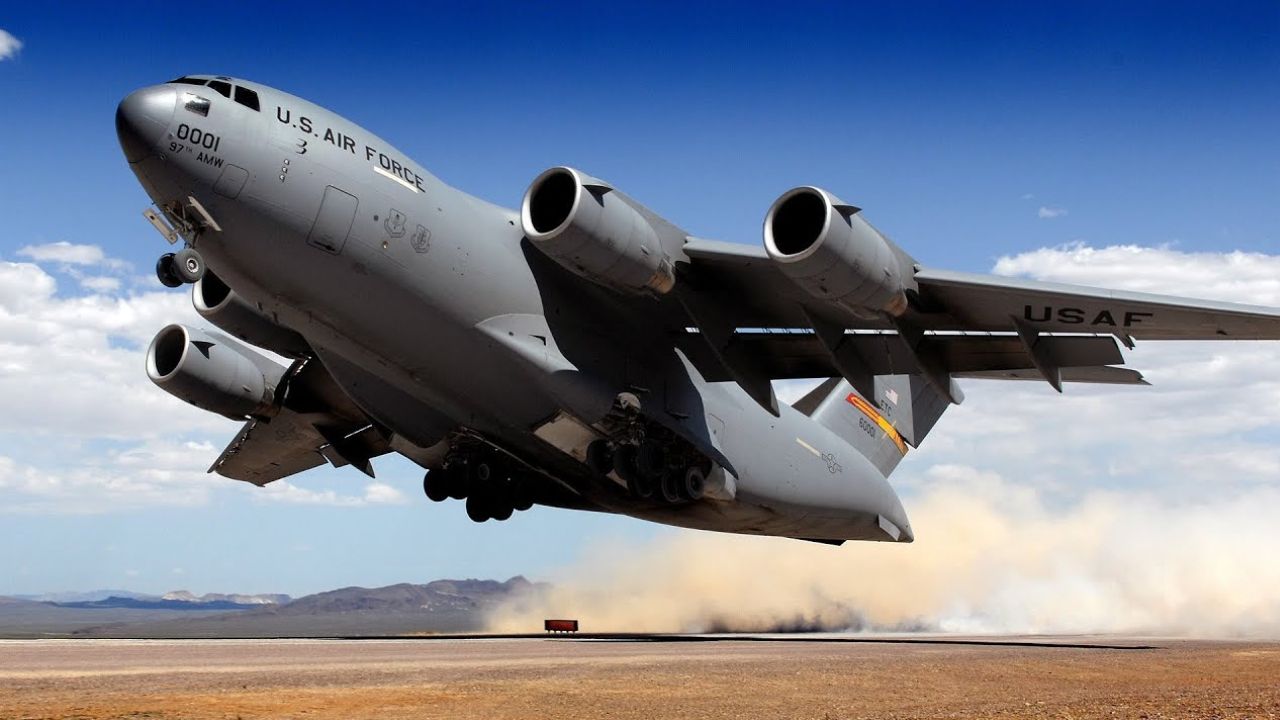
The Boeing C-17 Globemaster III stands as one of the most versatile military transport aircraft in service today. Among its many remarkable capabilities is the ability to perform steep tactical descents using inflight reverse thrust on all four engines. This maneuver allows the aircraft to drop from cruising altitudes around 25000 feet down to low level in approximately two minutes. Such rapid descents enable the C-17 to remain at safer heights for most of its journey before quickly descending into contested airspace to deliver critical supplies or equipment. This feature provides a significant tactical advantage by minimizing exposure to ground based threats during the vulnerable low altitude phase of missions.
The C-17 was designed from the outset to support operations in austere environments including short unprepared runways and high threat areas. Its Pratt & Whitney F117 engines combined with advanced flight controls make this rapid descent possible while maintaining aircraft stability and safety. Pilots and engineers have refined the procedure through extensive testing ensuring it can be executed reliably even under combat conditions. The technique has proven valuable in real world operations where speed and surprise can determine mission success.
Understanding The Reverse Thrust Mechanism On The C-17
The C-17 is powered by four Pratt & Whitney F117-PW-100 turbofan engines each producing 40440 pounds of thrust. These engines are derived from the PW2000 series used on commercial aircraft like the Boeing 757 but adapted for military demands. When pilots engage reverse thrust in flight the system redirects engine airflow to create powerful aerodynamic drag without compromising wing lift.
The reverse thrust system uses a translating sleeve design. When activated the outer cowl of each engine slides backward exposing a ring of cascade vanes. These vanes direct the fan bypass air upward and forward at approximately 45 degrees. This configuration generates intense drag that slows the aircraft rapidly while the upward vector helps maintain control and prevents the nose from pitching excessively. The core exhaust is also managed to avoid directing debris into the engines or obscuring pilot visibility.
This setup differs from many commercial jets where reverse thrust is used only after landing. On the C-17 the system is certified for inflight use allowing pilots to initiate steep descents from high altitude. The aircraft can achieve descent rates of up to 15000 feet per minute which is four to five times steeper than a typical commercial airliner descent. This capability keeps the C-17 above the effective range of many man portable air defense systems and anti aircraft artillery until the final moments of approach.
Tactical Reasons For High Altitude To Low Level Descents
Military transport missions often require operating in hostile environments where surface to air threats pose significant risks. Man portable air defense systems like the Stinger are generally ineffective above 12000 to 15000 feet while anti aircraft artillery struggles beyond 10000 feet. By cruising at altitudes above 25000 feet the C-17 remains largely out of reach for these lower tier weapons during the majority of the flight.
The rapid descent using reverse thrust minimizes time spent in the dangerous low altitude band where threats are most effective. Once the aircraft reaches the drop zone it can offload cargo quickly and depart before ground forces can coordinate an effective response. This is particularly important when delivering sensitive equipment such as main battle tanks or when operating near active combat zones.
The C-17 can also use this capability for combat landings on short or improvised runways. After touchdown the reverse thrust helps slow the aircraft rapidly while the engines provide enough power to back up on slight inclines or execute tight turns. This flexibility allows operations from austere airfields close to the front lines reducing the need for long vulnerable ground convoys.
Technical Features Supporting The Rapid Descent
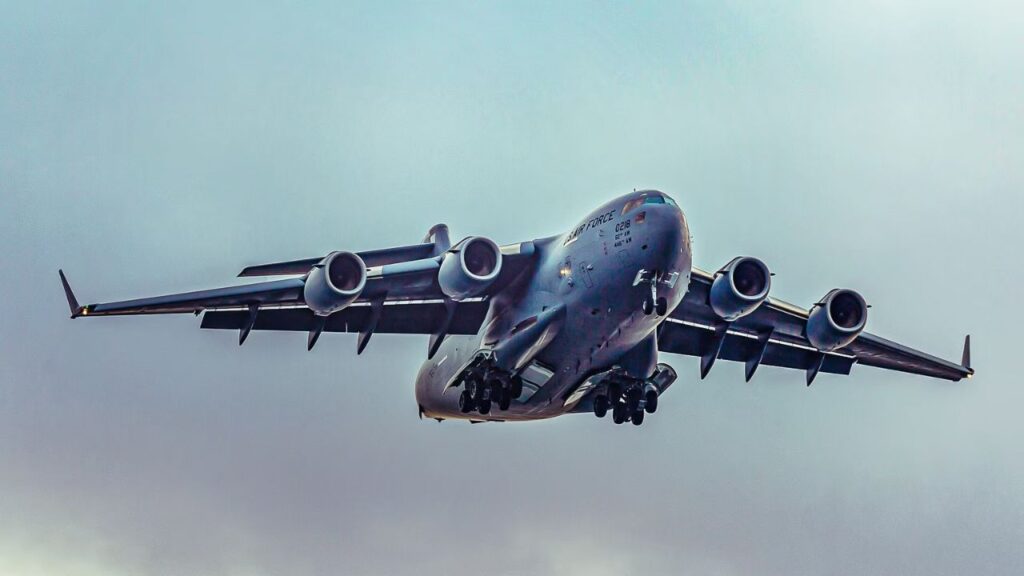
The F117 engines play a central role in enabling safe and controlled rapid descents. With a bypass ratio of 5.9 to 1 the engines deliver the thrust needed for both efficient cruise and powerful reverse thrust. The high mounted position of the engines on the wing reduces the risk of foreign object damage during low level operations in austere environments.
The C-17 also features externally blown flaps that enhance low speed performance. When flaps are deployed into the engine exhaust stream they create additional powered lift. This allows the aircraft to maintain control at low speeds during steep approaches. The combination of reverse thrust and blown flaps enables stable descents without stalling or losing directional control.
Redundant hydraulic systems power the thrust reversers flaps and landing gear ensuring continued functionality even if the aircraft sustains damage. The airframe incorporates titanium reinforcements in critical areas adding durability for operations in contested airspace. These design elements work together to make the rapid descent not only possible but repeatable under demanding conditions.
The table below outlines key performance parameters of the C-17 during tactical descents.
| Parameter | Value |
|---|---|
| Typical Descent Altitude | From 25000 feet to low level |
| Time For Descent | Approximately 2 minutes |
| Maximum Descent Rate | Up to 15000 feet per minute |
| Engine Thrust Per Unit | 40440 pounds |
| Reverse Thrust Configuration | Upward and forward at 45 degrees |
These figures highlight the aircraft exceptional descent performance compared to standard transport operations.
Ground Operations And Additional Capabilities
The reverse thrust system provides benefits beyond inflight descents. On the ground the C-17 can back up on a two percent slope and execute 180 degree turns on narrow runways. This is achieved by selective use of reverse thrust on specific engines combined with nose wheel steering up to 63 degrees. Such maneuvers allow quick repositioning on improvised strips reducing time on the ground in hostile areas.
The aircraft landing gear features six wheels on each main bogey and two on the nose gear distributing weight effectively on soft surfaces. This design prevents the heavy aircraft from becoming stuck while enabling operations from unprepared runways as short as 3500 feet under certain conditions.
These ground capabilities complement the inflight descent technique creating a complete tactical airlift solution. The C-17 can deliver heavy equipment directly to forward locations offload rapidly and depart before threats can fully respond. This end to end performance makes it invaluable for modern expeditionary operations.
Real World Applications And Operational Impact
The C-17 rapid descent capability has been demonstrated in numerous exercises and real world missions. During humanitarian operations and combat resupply the aircraft has used steep approaches to deliver aid or equipment while minimizing exposure. The technique has proven effective in environments ranging from mountainous regions to desert battlefields.
Pilots train extensively for these maneuvers ensuring they can execute them safely under pressure. The combination of powerful engines advanced flight controls and robust airframe allows the C-17 to handle the stresses of rapid altitude changes without compromising structural integrity or safety margins.
For the United States Air Force and partner nations the C-17 provides unmatched strategic flexibility. It can transport oversized cargo across oceans then transition seamlessly to tactical delivery in high threat areas. This versatility reduces the need for multiple aircraft types and simplifies logistics planning.
Future Relevance In Evolving Airlift Missions
As military operations increasingly emphasize speed and agility the C-17 rapid descent feature remains highly relevant. Advances in air defense systems make low level operations more dangerous underscoring the value of staying high until the last possible moment. The aircraft ongoing upgrades ensure it can continue meeting these demands well into the future.
The C-17 program has delivered more than 270 aircraft to the United States Air Force and international partners. Its proven performance in conflicts and humanitarian missions validates the original design decisions including the inflight reverse thrust capability. As new threats emerge the aircraft adaptability will help maintain its position as a cornerstone of tactical airlift.
In summary the C-17 Globemaster ability to drop 25000 feet in approximately two minutes using inflight reverse thrust represents a remarkable engineering achievement. This feature enhances survivability operational flexibility and mission effectiveness making the aircraft an indispensable asset for modern air forces. Its continued service demonstrates the enduring value of innovative design in military aviation.