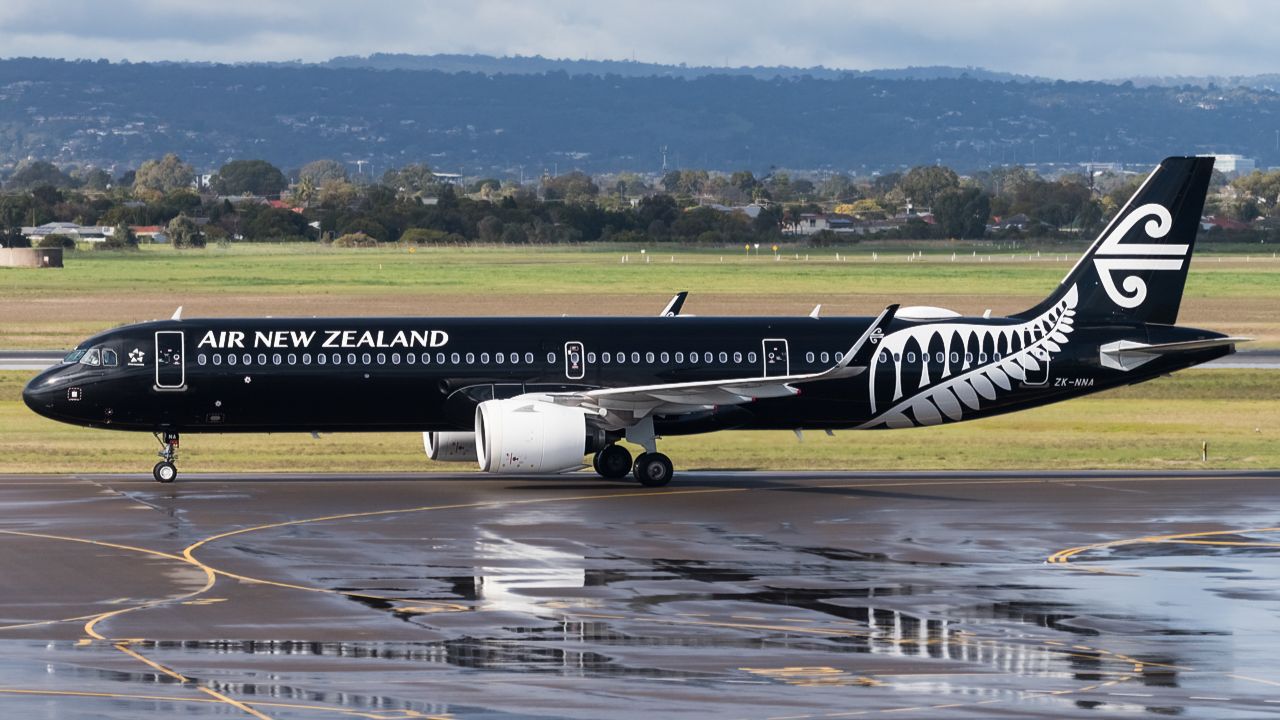
Travelers aboard Air New Zealand flight NZ272 from Brisbane to Wellington faced intense weather challenges on June 26 2026. The Airbus A321neo performed a brief touchdown at Wellington Airport before wind shear conditions prompted a go around. The aircraft then diverted safely to Christchurch. This event highlights the demanding operating environment at one of the world’s windiest airports.
Wellington Airport frequently contends with strong gusts due to its unique geography. The incident underscores both the professionalism of the flight crew and the robust safety protocols employed by Air New Zealand. No injuries occurred among passengers or crew and the aircraft resumed normal operations shortly afterward.
The Sequence of Events on Flight NZ272
Flight NZ272 departed Brisbane Airport slightly behind schedule at 9:38 AM local time after an original pushback target of 9:15 AM. The Airbus A321neo carried 214 passengers in an all economy configuration. The flight across the Tasman Sea proceeded normally for roughly three hours until the aircraft reached the approach phase into Wellington.
As the plane descended toward runway 34 strong gale force winds affected the area. Wind shear a sudden change in wind speed and direction struck during the final moments of the approach. The main landing gear tires made brief contact with the runway surface. Pilots immediately initiated a standard go around procedure to ensure safety.
Air New Zealand Chief Safety and Risk Officer Nathan McGraw provided a clear explanation of the events. He stated that the crew followed established protocols when wind shear occurred. The momentary wheel contact happened during the go around initiation. Due to ongoing adverse conditions at Wellington the pilots opted for a diversion to Christchurch Airport where they landed safely at approximately 3:25 PM. The total flight duration extended to around four hours.
Passengers described the experience as a roller coaster ride. Some reported hearing a loud bang followed by a rapid climb. Video footage captured the dramatic maneuver and quickly circulated online. Despite initial concerns about possible tail contact Air New Zealand confirmed after inspection that no such strike occurred. The aircraft received a thorough engineering check before returning to service.
Understanding Wind Shear and Its Impact on Aviation
Wind shear presents one of the most significant hazards during takeoff and landing phases. It involves abrupt variations in wind velocity that can alter an aircraft trajectory unexpectedly. Modern jets like the Airbus A321neo feature advanced warning systems that alert crews to potential shear conditions.
Pilots train extensively for these scenarios. A go around represents a well rehearsed maneuver where the aircraft climbs away from the runway applies full power and follows a published departure procedure. In this case the crew executed it flawlessly despite the challenging environment. The decision to divert demonstrated sound judgment given the prevailing weather.
Wellington Airport sits at the southern tip of the North Island bordering Cook Strait. This narrow waterway separates the North and South Islands and funnels strong winds between mountain ranges. The National Institute of Water and Atmospheric Research explains that this positioning creates consistently high wind speeds often exceeding gale force thresholds. Runway orientations and surrounding terrain add further complexity to approaches and departures.
Air New Zealand operates numerous flights into Wellington each day. Its pilots accumulate significant experience handling these conditions. The airline maintains strict weather minima and relies on sophisticated forecasting tools to manage risks effectively.
Aircraft Involved and Operational Context

The aircraft at the center of the incident registered as ZK NND is an Airbus A321neo. It was delivered to Air New Zealand on February 21 2019. This model offers improved fuel efficiency and performance compared to earlier variants making it well suited for trans Tasman routes.
ZK NND typically serves routes connecting Wellington Auckland and Christchurch with Australian east coast cities. Its all economy configuration supports high volume leisure and business travel across the Tasman. Following the diversion and inspection the aircraft returned to scheduled duties without further issues.
Air New Zealand maintains a modern fleet with a strong emphasis on safety. The A321neo fleet plays a crucial role in its network particularly on shorter haul international services. These aircraft complement the carrier longer range widebodies on routes to Asia and the Americas.
The following table outlines key flight data for NZ272 on June 26 2026:
| Detail | Information |
|---|---|
| Flight Number | NZ272 |
| Origin | Brisbane Airport (BNE) |
| Destination | Wellington Airport (WLG) |
| Aircraft | Airbus A321neo ZK NND |
| Departure Time | 9:38 AM AEST |
| Diversion Landing | Christchurch Airport (CHC) at 3:25 PM NZST |
| Total Flight Time | Approximately 4 hours |
| Passengers | 214 in all economy configuration |
Broader Weather Impact on Wellington Operations
The gale force winds on June 26 affected more than just flight NZ272. Multiple flights faced delays diversions or cancellations throughout the day. Another service NZ254 from Melbourne to Wellington diverted to Auckland drawing significant public attention on flight tracking platforms.
Wellington Airport operations returned to normal by Saturday June 27 as conditions improved. Airport staff worked diligently to rebook displaced passengers and restore schedules. Such disruptions while inconvenient remain relatively common at this location due to its exposure to prevailing weather patterns.
Aviation authorities and airlines collaborate closely on wind shear mitigation strategies. These include enhanced pilot training ground based detection systems and real time weather monitoring. Air New Zealand commitment to safety shone through in its transparent communication following the event.
Passenger and Crew Experience During the Incident
Those onboard NZ272 experienced a sudden shift from routine flight to heightened alertness. The brief runway contact followed by powerful engine thrust created a memorable sensation. Crew members provided clear updates and reassurance throughout the diversion process.
All passengers eventually reached Wellington via alternative flights. Air New Zealand prioritized reaccommodation and support services. The absence of injuries or damage reflects positively on both aircraft design and crew training standards.
Incidents like this often spark public interest in aviation safety. Experts emphasize that go arounds form a standard part of flight operations and occur more frequently than many realize. They serve as a critical safety net rather than an indication of failure.
Wellington Airport Reputation for Challenging Conditions
Plane enthusiasts regularly gather at Wellington Airport to observe aircraft handling strong crosswinds. The spectacle attracts attention from both locals and visitors. Pilots consider operations here a demonstration of skill and the aircraft robust capabilities.
Cook Strait acts as a natural wind tunnel exacerbating weather effects. Surrounding hills create complex airflow patterns that demand precise piloting. Despite these challenges the airport maintains an excellent safety record through careful planning and experienced personnel.
Air New Zealand continues to invest in technology and training to navigate such environments. Its track record on trans Tasman routes remains strong even amid occasional weather disruptions.
Safety Protocols and Industry Response
Aviation regulators worldwide classify wind shear as a key hazard. The International Civil Aviation Organization provides guidelines that operators like Air New Zealand incorporate into their procedures. Modern aircraft incorporate predictive wind shear detection that gives crews additional seconds to react.
In this instance the crew response aligned perfectly with training. The diversion to Christchurch allowed for a stable landing in more favorable conditions. Subsequent aircraft inspection confirmed full airworthiness before return to service.
The event received coverage from major New Zealand media outlets including the NZ Herald. Public discussion focused on the dramatic visuals while acknowledging the professional handling by all involved.
Lessons and Continued Operations
This incident reinforces the importance of flexibility in flight planning. Airlines maintain diversion airports and alternate procedures to manage unforeseen weather events. Passengers benefit from knowing that crews prioritize safety above schedule adherence.
Air New Zealand fleet including its A321neo aircraft continues to operate reliably across the network. The carrier commitment to transparency helps build passenger confidence following such events. As weather patterns evolve robust protocols will remain essential for safe operations at challenging airports like Wellington.
Travelers planning flights into windy destinations can prepare by checking forecasts and understanding potential delays. The aviation industry overall benefits from sharing experiences like this one to refine practices and enhance safety margins.