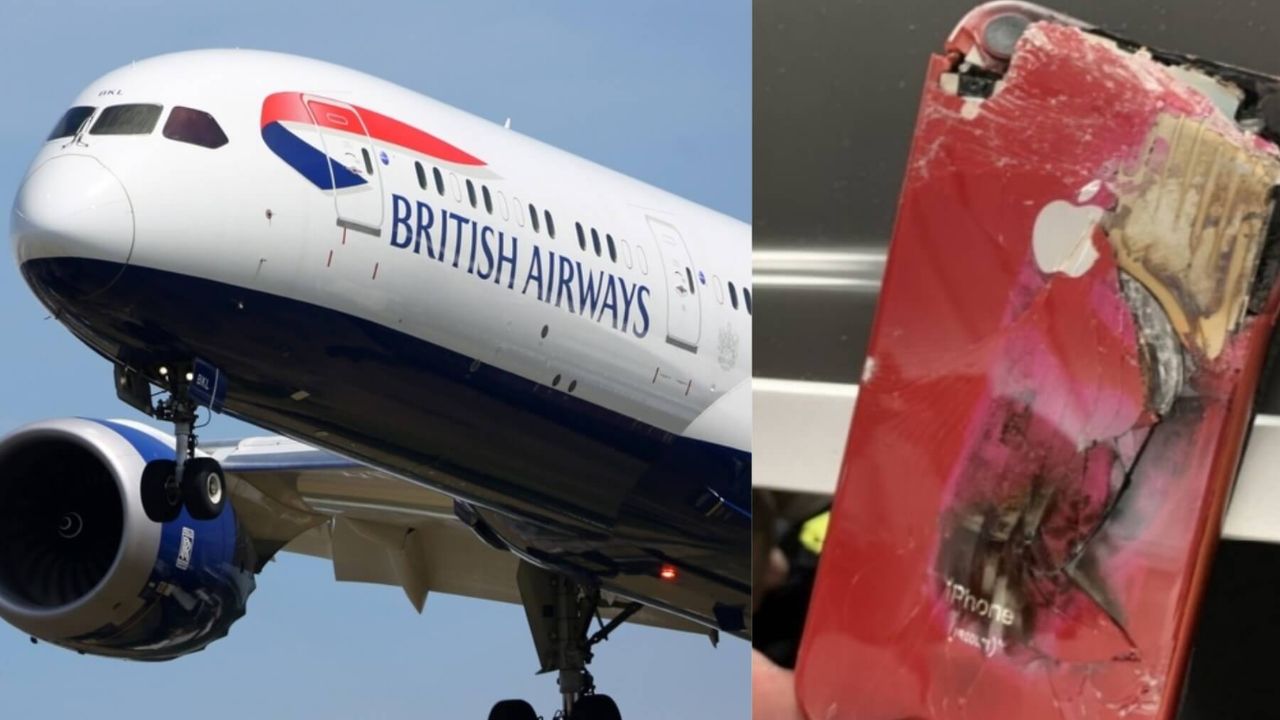
A British Airways Boeing 787-9 Dreamliner experienced a cabin fire caused by a passenger mobile phone during a transatlantic flight from London to Las Vegas. The crew responded quickly to contain the blaze and declared an emergency as the aircraft approached its destination. Although the incident created visible scorching inside the cabin the flight landed safely without injury to passengers or crew. This event highlights ongoing concerns about lithium ion battery devices on aircraft and the effectiveness of onboard fire suppression procedures.
The occurrence on June 15 2026 involved flight BA271 which departed London Heathrow Airport bound for Harry Reid International Airport. It serves as a reminder that even routine items like smartphones can pose risks in the unique environment of high altitude flight. British Airways and aviation authorities are reviewing the details while emphasizing that safety remains the top priority.
Timeline Of The Incident On Flight BA271
British Airways flight BA271 pushed back from London Heathrow a bit behind schedule departing at approximately 12:57 PM local time instead of the planned 12:15 PM. The Boeing 787-9 operated smoothly across the North Atlantic and North American routes. As the aircraft began its descent toward Las Vegas around 2 PM Pacific time a passenger device ignited.
The fire originated near a window seat in row 37 on the right side of the aircraft. Reports indicate a faulty charger contributed to thermal runaway in the phone lithium ion battery. Cabin crew acted promptly using fire extinguishers to suppress the flames. The crew then contacted air traffic control declaring an emergency and reporting that the device had scorched interior cabin materials but the situation was under control.
The pilots requested maximum assistance upon arrival at Harry Reid International Airport. Clark County Fire Department personnel responded as a precaution. The aircraft touched down safely around 2:26 PM local time roughly 30 minutes ahead of the original schedule despite the onboard event. Passengers disembarked normally after the aircraft taxied to the gate.
British Airways issued a statement confirming that customer and crew safety was the highest priority and that the flight concluded without further disruption. The Federal Aviation Administration has launched an investigation into the circumstances surrounding the fire.
The Aircraft Involved G-ZBKH
The Boeing 787-9 Dreamliner registered G-ZBKH has been part of the British Airways fleet since its delivery in June 2016. At the time of the incident the aircraft was approximately 10.3 years old with a solid operational history. It features 216 seats across four classes including Club World World Traveller Plus and World Traveller cabins.
The 787 family is known for its advanced composite construction efficient engines and enhanced cabin pressurization which contributes to passenger comfort on long haul routes. In this case the aircraft design and crew training played key roles in containing the fire without necessitating a diversion.
The table below outlines basic details of the aircraft and flight.
| Detail | Information |
|---|---|
| Aircraft Type | Boeing 787-9 Dreamliner |
| Registration | G-ZBKH |
| Flight Number | BA271 |
| Route | London Heathrow to Las Vegas |
| Date of Incident | June 15 2026 |
| Departure Time Actual | 12:57 PM London time |
| Arrival Time | 2:26 PM Las Vegas time |
| Seat Capacity | 216 seats in four classes |
This aircraft continues to serve the airline on various long haul routes following standard post incident inspections.
Understanding Lithium Ion Battery Fires On Aircraft
Mobile phones and other personal electronic devices rely on lithium ion batteries which offer high energy density but carry inherent risks. Under certain conditions such as damage overcharging or manufacturing defects these batteries can enter thermal runaway. This process generates intense heat smoke and flames that can spread rapidly.
Aviation regulations strictly control the transport and use of such devices. Passengers must carry lithium batteries in carry on luggage rather than checked bags where fires would be harder to detect and suppress. Crew members receive specific training on handling battery fires including the use of specialized extinguishers that combat thermal events without exacerbating them.
In this British Airways incident the fire was contained effectively demonstrating the value of crew preparedness. However the scorching of cabin materials indicates the intensity of the event and the need for continued vigilance.
How Airlines And Crews Manage Such Emergencies
British Airways like other major carriers follows detailed standard operating procedures for in flight fires. Crew members are trained to locate the source isolate it if possible and use appropriate extinguishers. On the Boeing 787 the cabin design includes smoke detection systems and improved ventilation that can help limit smoke spread.
During the BA271 event crew members had to navigate passengers to access the affected area. The pilots coordinated with air traffic control while maintaining focus on a safe approach and landing. Requesting emergency services on the ground adds an extra layer of preparedness even when the situation appears controlled.
The table below summarizes typical steps in managing a lithium battery fire onboard.
| Step | Description |
|---|---|
| Detection | Identify smoke or flames from device |
| Response | Use Halon or other approved extinguishers |
| Containment | Move passengers isolate area |
| Communication | Inform pilots request assistance |
| Post Incident | Medical checks aircraft inspection |
These protocols help ensure that minor incidents do not escalate into major emergencies.
Broader Implications For Aviation Safety
This incident adds to a growing list of lithium battery related events in commercial aviation. Regulators including the FAA and European Union Aviation Safety Agency continue to study the risks and update guidelines. Recommendations often include improved passenger education about proper device charging and storage during flights.
Airlines invest in cabin crew training and advanced fire suppression technologies. The Boeing 787 incorporates materials and systems designed to enhance fire resistance compared to older aircraft generations. Nevertheless the confined space and high altitude conditions make any fire event potentially serious.
Passengers on long haul flights should remain aware of the rules regarding electronic devices. Avoiding use of third party chargers and monitoring devices while charging can reduce risks. In the event of any unusual smell or heat from a device immediate notification to crew is essential.
British Airways Operations On The Las Vegas Route
British Airways operates multiple weekly flights between London Heathrow and Las Vegas supporting both leisure and business travelers. The route often sees high demand particularly during events or peak seasons. The airline deploys both Boeing 787-9 and Airbus A350-1000 aircraft on these services providing reliable transatlantic connectivity.
The safe handling of this incident reflects positively on crew professionalism and aircraft capabilities. British Airways maintains a strong safety record and works closely with authorities following any unusual events to identify improvements.
Looking Ahead For Device Safety In The Skies
As personal electronics become more prevalent and powerful the aviation industry must balance convenience with risk management. Future solutions may include better onboard charging stations with built in safety monitoring or advancements in battery chemistry that reduce thermal runaway potential.
For now passengers and crews rely on awareness training and rapid response. The British Airways Boeing 787 event on June 15 2026 ended without harm thanks to effective procedures but it serves as a timely reminder of the importance of caution with lithium powered devices at 35000 feet.
Travelers on similar routes can feel reassured by the layered safety systems in modern aircraft and the preparedness of professional flight crews. Ongoing investigations will likely yield additional insights that further strengthen protocols across the industry.
This incident while concerning ultimately demonstrated the resilience of aviation operations when unexpected events arise. With continued focus on prevention and response air travel remains one of the safest modes of transportation worldwide.