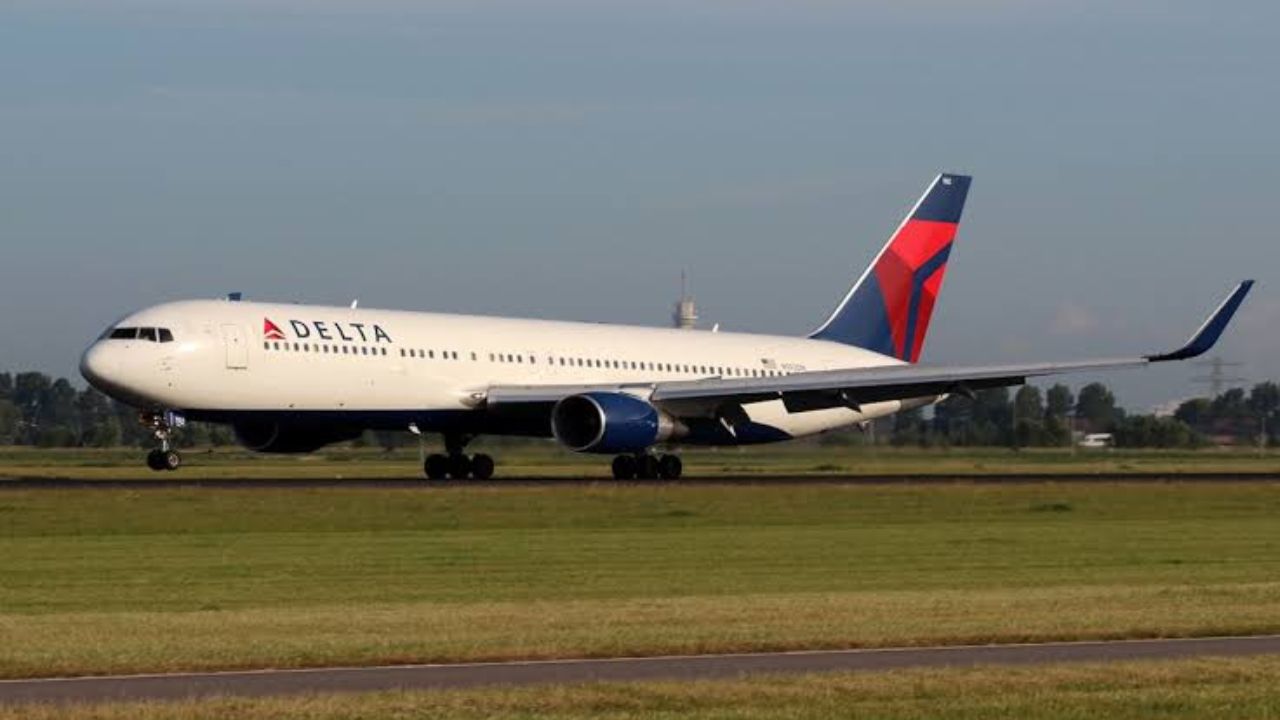
The Boeing 777-300ER and the Boeing 787 Dreamliner represent two distinct approaches to long haul travel within Boeings widebody family. At first glance both aircraft serve international routes with twin engines and advanced technology. Yet a closer examination reveals that the 777-300ER stands significantly larger in nearly every measurable aspect. This size difference shapes their roles in airline fleets with the 777-300ER acting as a high capacity workhorse for busy routes and the 787 focusing on efficiency for point to point services.
This comparison explores the physical dimensions passenger capacity weight engine power cargo capabilities and market positioning of these two popular jets. Understanding these differences helps illustrate why airlines choose one over the other for specific operations.
Overall Size And Dimensions
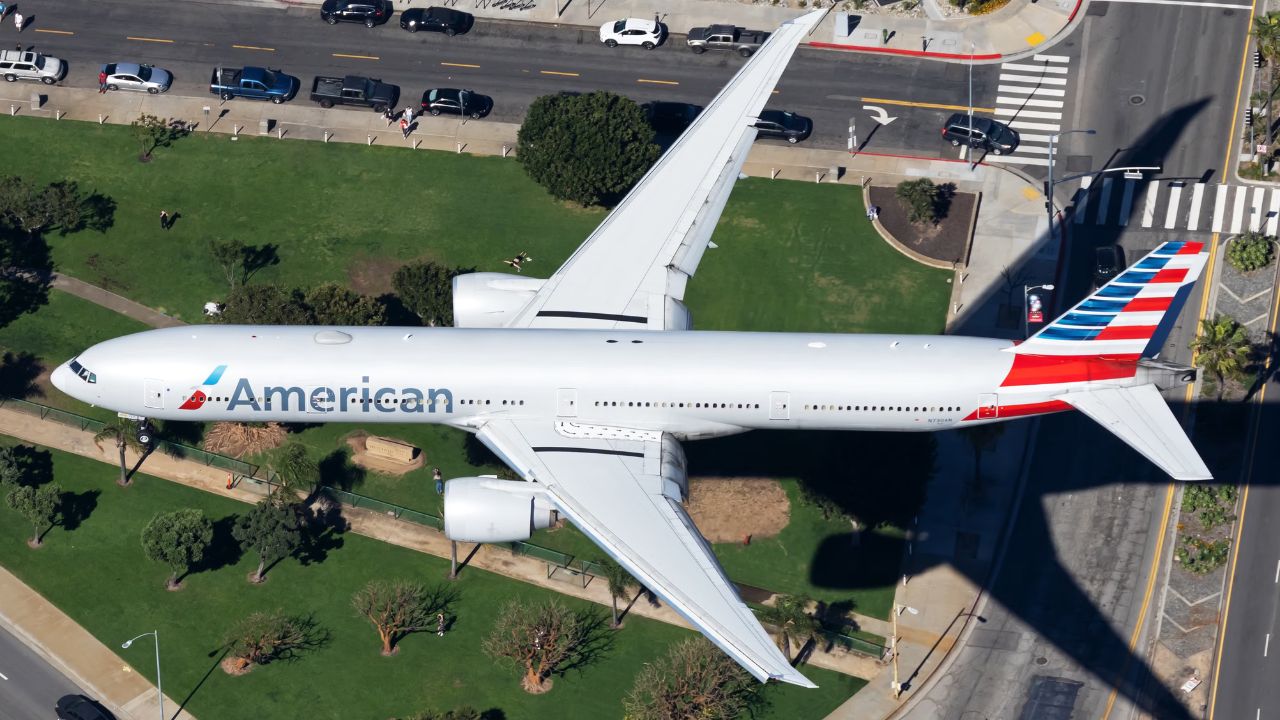
The Boeing 777-300ER measures approximately 242 feet four inches or 73.9 meters in length. This makes it noticeably longer than any variant in the 787 family. The longest 787 model the 787-10 stretches to about 224 feet or 68.3 meters while the smallest 787-8 comes in at roughly 186 feet or 56.7 meters.
Wingspan provides another clear point of distinction. The 777-300ER boasts a wingspan of 212 feet seven inches or 64.8 meters. In contrast the 787 family features a wingspan of approximately 197 feet or 60.1 meters across its variants. Although the 787 incorporates advanced composite materials that enhance its aerodynamic performance the 777-300ERs larger wings support the greater structural demands of its heavier design.
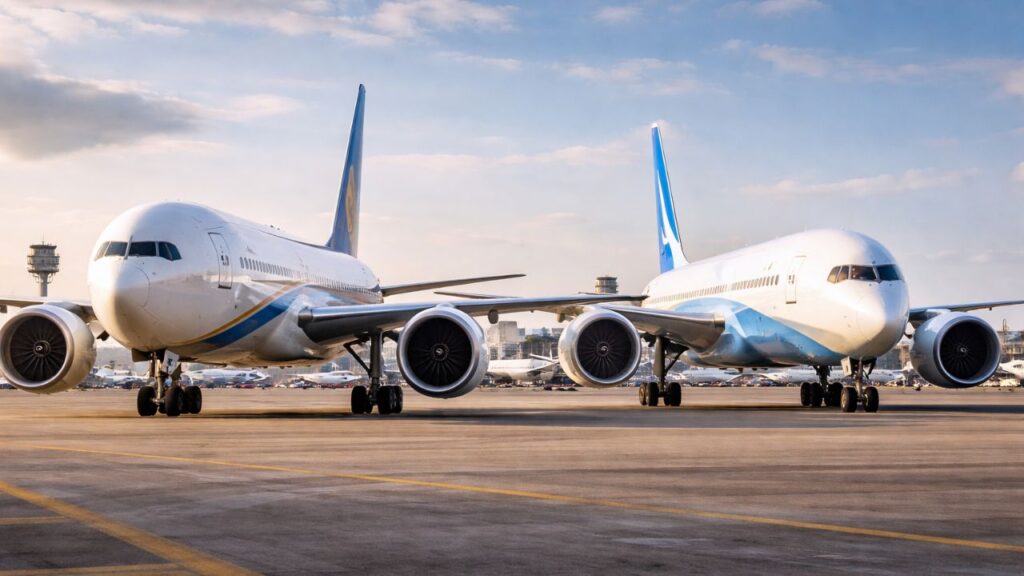
Height also sets them apart. The 777-300ER stands about 61 feet or 18.5 meters tall at the tail while the 787 reaches around 56 feet or 17 meters. These external measurements become immediately apparent when the two aircraft park side by side on the ramp. The 777-300ER commands more space at the gate and requires careful planning for ground operations due to its scale.
These dimensional differences stem from their original design goals. Boeing developed the 777-300ER as an evolution of the 777 family to replace older four engine jets like the 747-400 on high demand long haul routes. The 787 on the other hand emerged from the need for a more fuel efficient aircraft capable of serving thinner long haul markets effectively.
Passenger Capacity
Passenger capacity highlights the size gap most clearly for travelers and airline planners. In typical two class configurations the 777-300ER accommodates between 350 and 370 passengers. Some airlines configure it for higher density operations exceeding 400 seats making it ideal for busy corridors with strong demand.
Emirates the largest operator of the type demonstrates this flexibility with multiple layouts. The table below shows various Emirates configurations for the Boeing 777-300ER.
| Aircraft | First Class | Business Class | Premium Economy | Economy Class | Total |
|---|---|---|---|---|---|
| Boeing 777-300ER (v1) | 6 | 38 | 24 | 256 | 324 |
| Boeing 777-300ER (v2) | 8 | 40 | 24 | 256 | 328 |
| Boeing 777-300ER (v3) | 8 | 40 | 24 | 260 | 332 |
| Boeing 777-300ER (v4) | 8 | 42 | – | 304 | 354 |
| Boeing 777-300ER (v5) | 8 | 42 | – | 310 | 360 |
| Boeing 777-300ER (v6) | – | 35 | – | 386 | 421 |
The 787 family offers smaller capacities suited to its design philosophy. The 787-8 typically seats 230 to 250 passengers in two classes. The 787-9 increases this to roughly 260 to 290 while the largest 787-10 can handle 300 to 330 passengers. Even at its maximum the 787-10 falls short of the 777-300ERs capabilities.
This disparity reflects different operational sweet spots. The 777-300ER excels on dense hub to hub routes where filling a large aircraft proves feasible. Airlines deploy it on established corridors with consistent passenger traffic. The 787 shines on routes with moderate demand allowing carriers to open new city pairs or maintain frequency without overcapacity.
Cabin width further enhances the sense of space in the 777-300ER. Its fuselage supports comfortable ten abreast economy seating in a three four three arrangement. The 787 typically uses nine abreast in a three three three setup providing a more intimate feel that many passengers appreciate on long flights.
Maximum Takeoff Weight And Engine Power
The 777-300ERs maximum takeoff weight reaches approximately 775000 pounds or 351 metric tonnes. This substantial figure enables it to carry full passenger loads significant cargo and ample fuel for extended range operations. The largest 787-10 has a maximum takeoff weight of around 560000 pounds or 254 metric tonnes with smaller variants weighing even less. The difference exceeds 200000 pounds or 90 metric tonnes creating a major capability gap.
This weight advantage requires robust landing gear. The 777-300ER features six wheel main gear assemblies while the 787 uses a lighter four wheel configuration. The stronger structure supports the increased loads during takeoff and landing especially on long haul sectors.
Engine power underscores the scale difference. The 777-300ER relies on General Electric GE90-115B engines each delivering up to 115000 pounds of thrust. These massive powerplants rank among the largest ever used on commercial aircraft with fan diameters that exceed the fuselage width of many narrowbody jets.
The 787 family uses either Rolls-Royce Trent 1000 or General Electric GEnx engines producing between 64000 and 76000 pounds of thrust depending on the variant. While these engines prioritize fuel efficiency and lower emissions they generate significantly less raw power than the GE90 series. This power differential allows the 777-300ER to operate from challenging airports with high temperatures or elevations while maintaining strong performance on lengthy routes.
Cargo Capacity
Beyond passengers the 777-300ER provides substantially greater cargo capability. Its longer fuselage and wider body create expansive underfloor holds that can accommodate numerous standard containers. Airlines frequently load significant freight alongside passengers contributing meaningfully to route profitability on long haul services.
The 787 offers respectable cargo space for its size but its smaller dimensions and lower maximum takeoff weight limit total freight capacity. On some flights operators may need to reduce passenger loads or prioritize one over the other. The 777-300ER often handles both without such tradeoffs making it particularly valuable for carriers with strong cargo networks.
This cargo advantage proves especially useful on routes connecting major economic centers where belly hold revenue can offset fuel costs. For airlines like Emirates and Qatar Airways the 777-300ERs dual role as passenger and freight mover enhances overall economics.
Market Position And Largest Operators
The 777-300ER occupies the upper end of Boeings widebody spectrum. It serves as a flagship aircraft for many carriers replacing older high capacity jets on the worlds busiest long distance routes. Its size supports high frequency operations between major hubs where demand justifies large aircraft.
The 787 complements rather than competes directly with larger widebodies. Its efficiency and flexibility enable airlines to serve secondary cities or launch new routes that might not support a 777-300ER. Boeing designed the two types to address different segments of the market with the 777-300ER focusing on volume and the 787 on versatility.
Current fleet data illustrates these preferences. The table below lists the largest commercial operators of the Boeing 777-300ER.
| Ranking | Airline | Boeing 777-300ERs |
|---|---|---|
| 1 | Emirates | 118 |
| 2 | Qatar Airways | 57 |
| 3 | Air France | 43 |
| 4 | Cathay Pacific | 35 |
| 5 | Saudia | 35 |
| 6 | Turkish Airlines | 35 |
| 7 | EVA Air | 33 |
| 8 | Air China | 28 |
| 9 | Korean Air | 25 |
| 10 | Singapore Airlines | 22 |
For the 787 family All Nippon Airways leads with around 90 aircraft across variants. The table below shows the largest operators of the Boeing 787 family.
| Ranking | Airline | Boeing 787-8 | Boeing 787-9 | Boeing 787-10 | Total |
|---|---|---|---|---|---|
| 1 | All Nippon Airways | 36 | 44 | 10 | 90 |
| 2 | United Airlines | 12 | 52 | 21 | 85 |
| 3 | American Airlines | 37 | 33 | – | 70 |
| 4 | Qatar Airways | 31 | 20 | – | 51 |
| 5 | Etihad Airways | – | 37 | 10 | 47 |
| 6 | Japan Airlines | 23 | 22 | – | 45 |
| 7 | British Airways | 12 | 18 | 12 | 42 |
| 8 | Air Canada | 8 | 32 | – | 40 |
| 9 | Hainan Airlines | 10 | 28 | – | 38 |
| 10 | LATAM Airlines | 10 | 27 | – | 37 |
Why The Size Difference Matters
The Boeing 777-300ERs greater size translates into specific operational strengths. It can transport more people and cargo over long distances providing economies of scale on popular routes. However this comes with higher absolute fuel consumption compared to the smaller 787 even if per seat efficiency remains competitive in high load scenarios.
The 787s more modest proportions deliver excellent fuel burn per passenger making it attractive for cost conscious operators on variable demand routes. Its composite construction also contributes to lower maintenance needs and a quieter cabin experience.
Airlines evaluate these factors alongside route specifics market conditions and fleet strategy when deciding between the types. Many large carriers operate both successfully leveraging the 777-300ER for core routes and the 787 for expansion.
The Bigger Picture In Boeing Widebody Strategy
The contrast between the 777-300ER and 787 Dreamliner demonstrates Boeings thoughtful product lineup. Rather than creating direct competitors the manufacturer offers tools suited to different missions. The 777-300ER continues to serve airlines needing maximum capacity while the 787 opens opportunities for more sustainable and flexible operations.
As the aviation industry evolves with emphasis on efficiency and environmental performance both aircraft types maintain strong relevance. The 777-300ERs proven track record and the 787s technological advances ensure they will fly side by side for years to come each excelling in its designated role.
This size comparison reveals more than numbers. It highlights how aircraft design choices directly influence global connectivity route networks and passenger experiences. Whether you prefer the spacious feel of a large widebody or the efficiency of a modern midsize jet both the 777-300ER and 787 contribute significantly to modern long haul travel.