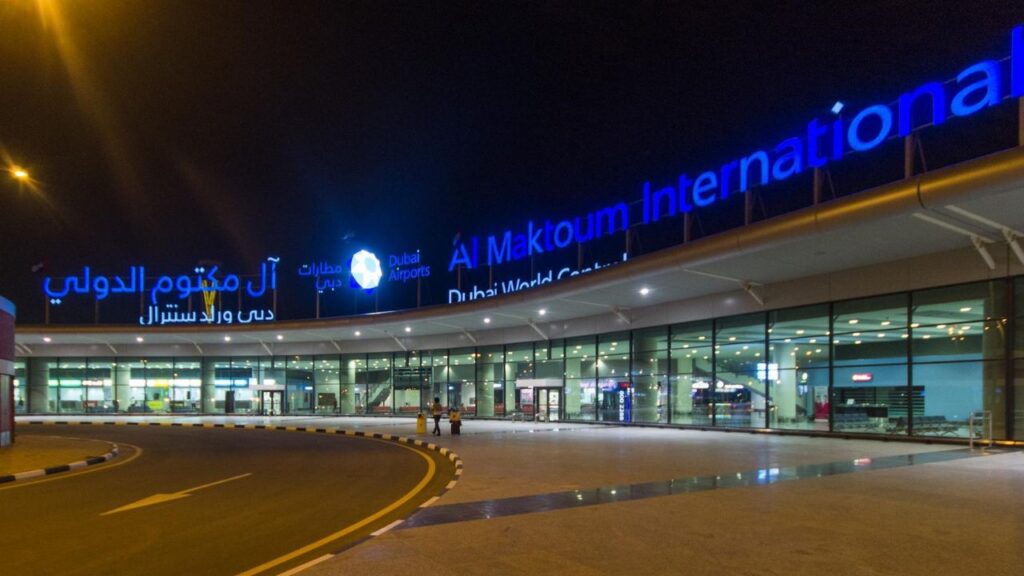
Out past the dunes, where sand meets sky, construction hums without pause. The site once silent now pulses with cranes and crews shaping something massive. Al Maktoum International Airport rises, This is not just another terminal but a vision scaled beyond current need. Engineers built it wide on purpose, leaving no tight corners for giant planes to struggle through. Each docking point opens fully to accept the biggest jets flying today, like the Airbus A380, without adjustments or delays.
While older airports squeeze growth into crowded runways, this one spreads out freely across empty land. There is plenty of room here to move, expand, and adapt. Gates align precisely so large aircraft taxi smoothly, and they are never forced to backtrack or wait. This isn’t retrofitting old layouts; it’s starting fresh and thinking ahead. Size matters less than smart spacing when handling constant heavy traffic. Planes arrive, unload, and turn around, all without bottlenecks forming behind them.
This story doesn’t revolve around status. Instead, it responds to the limits at Dubai International Airport (DXB), the top global crossroads for travelers, which is now squeezed by physical boundaries. A new beginning out in the desert allows designers room to build from nothing. They are focused on speed, volume, and matching what Emirates will need next with large aircraft. Rather than patch an old system, they laid down clean ground shaped only by tomorrow’s demands.
Inside the 128 Billion AED Expansion
One step ahead, the UAE government put forward 128 billion AED, which is around $34.85 billion, for expanding the passenger terminal at Al Maktoum International Airport. Built across nearly 36,000 acres, close to 145.7 square kilometers, it’ll rise far beyond typical airport sizes.
Key features of the master plan include:
- Five Parallel Runways: Running side by side, five runways handle heavy jets taking off and landing one after another without delay. Each strip stays busy yet separate, allowing constant traffic flow under steady demand.
- Massive Passenger and Cargo Capacity: Each year, it can handle up to 260 million travelers. On top of that, freight moves at a rate of 12 million metric tons. Yearly limits stretch this far when counting both people and goods.
- Automated Transit Loop: A central hub links four separate terminals through an automatic transit loop. This network includes fourteen stops, moving travelers quickly between zones. Speed matters here, so the transport runs nonstop on elevated tracks. Each concourse connects seamlessly without long walks or delays. The whole setup cuts down transfer times across the facility.
By 2032, the first stage should wrap up, handling about 150 million travelers each year. Over time, flights will shift slowly from DXB thanks to expanded facilities, making DWC the main airport hub in Dubai for years ahead. Five times larger than today’s DXB, the new airport covers ground like nothing seen before. Built to grow steadily, its layout follows Dubai’s plan for future wealth. Size alone sets it apart because it is massive by design and shaped by ambition.
Building Each Gate for a 262-Foot Wingspan
Wings stretching nearly 80 meters wide, the Airbus A380 measures just under 73 meters long, making it big enough to need the top-tier ICAO F category. Because of that size, space around it must be ample during movement on the ground. Clearance near wingtips and tail becomes critical when taxiing or turning. Without room to spare, close calls could happen more easily. Handling such a large plane means every inch counts while rolling or parking.
Most older airports can’t handle large planes at every gate. When an A380 lands, nearby areas sometimes need emptying, and this slows things down. Instead of patching old layouts, DWC built all 400 boarding positions to top-tier size rules from the start.
Built to work everywhere, right out of the box:
- Universal Gate Placement: A plane shows up, big or small, and lands at the airport. Any open gate works just fine. Gate choice isn’t limited by how large the craft is. Whatever spot sits empty gets used next. No rules block where it must park. Size doesn’t matter when picking a place to stop.
- Flexible Scheduling: Just skip booking top-tier spots or keeping planes waiting at the gate. Airspace flows easier when timing stays loose.
- Reduced Ground Delays: Planes move faster on the tarmac, so delays shrink. Efficiency climbs when crews finish tasks without waiting around.
Out of all airlines, Emirates runs the biggest group of A380s, and that shapes how things are built at DWC. Because the airport lines everything up neatly, there is less wasted room compared to older hubs.
Emirates’ Superjumbo Symphony
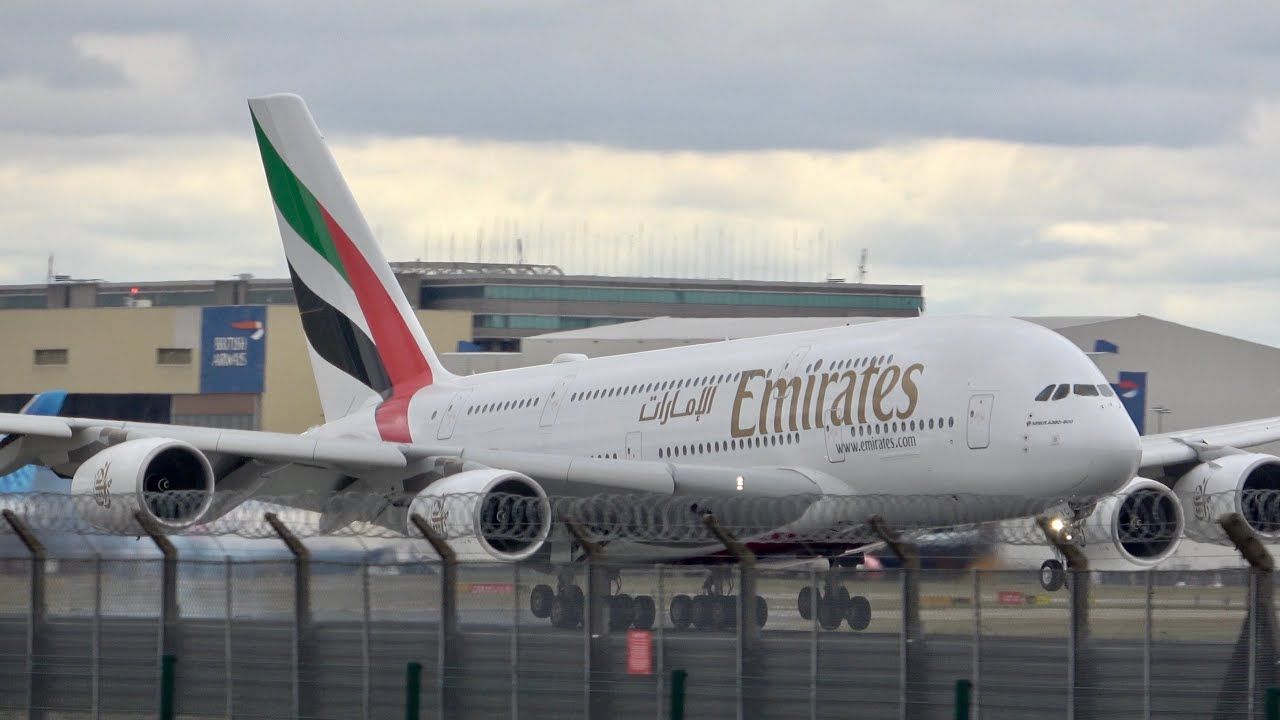
Out of all airlines, Emirates stands out with more than 110 A380s flying under its name. They are still pouring resources into upgrades and daily use. Big cabins fill fast because the strategy leans hard on roomy layouts and special touches like first-class showers and bars, yet stays sharp on crowded international paths.
One step ahead, Emirates prepares a fresh hub for aircraft care near Dubai South, priced at 18.7 billion AED ($5.1 billion). Instead of scattered setups, this spot brings everything under one roof with big spaces built just for wide-body jets. Because these hangars are made for massive planes, fixes happen quicker. Over time, it becomes the backbone keeping flights steady far beyond today.
Even though most airlines have cut back on or stopped using the A380 because of steep expenses and shifts in travel demand, Emirates still flies them heavily. Because of its newest airfield and service center, there is clear proof that huge jets remain central. This setup keeps pace with the plane’s specific needs.
Four Concourses, Four Hundred Stands
Four huge concourses shape the terminal, and each holds close to 100 boarding spots, adding up to 400 contact gates altogether. Because planes need efficient access, every position gets a high-capacity jetbridge that is either two or three levels tall. These multi-story walkways handle large double-decker aircraft without slowing things down. With such setups, moving passengers becomes faster, even during peak times. Structure meets function where design allows smooth flow from gate to cabin.
Boarding an A380 takes longer when only one bridge is used since these planes hold more than 500 people after all. Instead of waiting, upper and lower levels now get separate walkways at once. One group heads upstairs while another moves below, cutting delays before departure. Because both sections fill without overlapping, flights leave closer to schedule. Efficiency jumps when passenger streams do not mix.
Even small shifts in design matter when terminal levels need to match different plane door heights on multiple floors. Moving walkways help travelers cover long distances inside the complex, making transfers between flights more reliable without guesswork.
Eradicating the Apron Bus Experience
Most planes using 400 full contacts hardly ever need faraway spots anymore. At numerous airfields, people step off shaky ramps into blazing heat before climbing buses. This is rough on first-class flyers or anyone rushing between flights.
Inside DWC, every gate opens straight onto the terminal with no detours and no delays. Because transfers happen fast here, space must work hard without showing stress. Emirates counts on smooth flow to back its standing; anything less shows instantly when crowds build. A single bottleneck risks what hours of planning tries to prevent.
Broad Impact on World Air Travel
Nowhere else is building faster than here, where runways stretch toward tomorrow’s demand. This push isn’t just concrete and steel. It is Dubai reaching ahead and shaping how people move when borders open wide again. While others grow slowly, new terminals rise sharply against the desert sky. Hubs across Asia widen their gates, yet the race stays tight. Being first means everything, so towers climb higher, built on timing more than bricks. The goal is to sit at the center, where every long flight bends through one sunlit crossroads.
Jobs will grow by the tens of thousands thanks to this project, opening doors across many fields. A new urban hub near the airport could house more than a million people, reshaping how cities expand here. Logistics areas will rise alongside transport links, tying into Etihad Rail’s network. Growth won’t stop at employment because it stretches into infrastructure that moves goods and people alike.
Even so, big costs still stand in the way. The harsh desert landscape brings added pressure on planning. New systems such as self-guided luggage routes must link smoothly with identity scans at checkpoints. Work has begun though, since deals are signed. That shift forward feeds confidence about hitting early goals by 2032.
A Future-Proof Megahub
Every gate at Dubai World Central gets built with the A380 and big jets in mind. Because of that, delays tied to layout start fading away. Fleet needs for Emirates line up cleanly here. Growth in travelers and freight fits naturally into the plan. What shows now is what will hold years ahead.
Now taking shape, DWC stands as more than the planet’s biggest airport by most counts; it’s shaping up as a model for future air travel hubs. With every phase completed, movement through terminals could feel less like effort and more like flow. Step by step, the project shows airlines and planners alike that smart design can stretch past physical barriers and daily constraints. The runway expands, and so does the thinking behind it.
Out here where sand meets sky, something big is rising. This is not just steel and glass, but ambition shaped like runways. This isn’t about keeping up; it’s staying ahead, quietly building what others only talk about. Giants will land before long on fresh tarmac, built wide enough for the future’s heaviest wings. Vision becomes concrete when most aren’t looking. Soon, the horizon will hold more than heat haze because it’ll carry thunder from engines touching down.