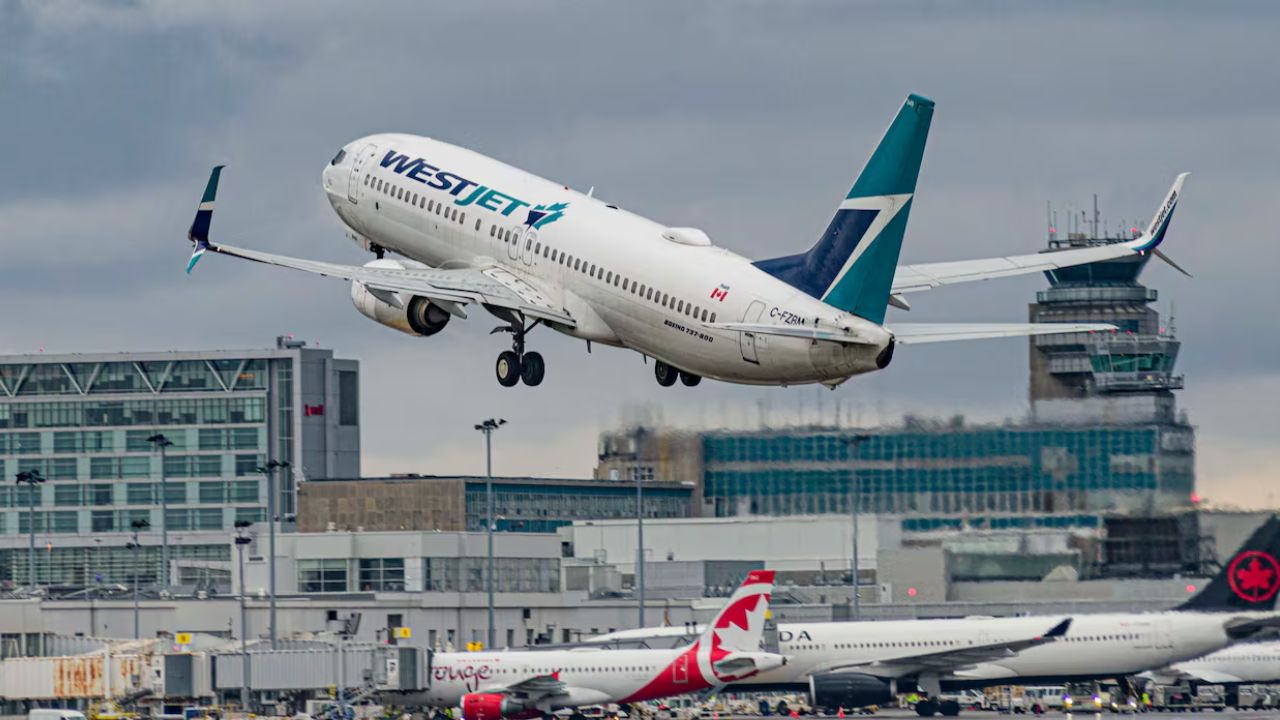
WestJet is significantly reducing its transborder operations this summer, cutting service on multiple routes between Canada and the United States. The adjustments reflect changing travel patterns among Canadian passengers and the airline’s strategic reallocation of its Boeing 737 fleet toward higher demand markets.
This move comes amid broader softness in Canadian leisure travel to the US, with WestJet responding by enhancing connections to Mexico, the Caribbean, and Europe. The changes aim to better align capacity with where passengers want to go, supporting the airline’s position as Canada’s leading leisure carrier.
Sharp Decline in Canada-US Flights for Q3 2026
WestJet’s schedule data for the third quarter of 2026 shows a notable contraction compared to the same period in 2025. The airline is reducing Canada-US flights by approximately 1,260, representing a 14.1 percent decrease from nearly 9,000 flights operated previously.
This reduction stands out against a relatively stable overall transborder market. While WestJet trims aggressively, other carriers like Air Canada have maintained or slightly increased operations. The broader Canada-US market remains nearly flat year over year, highlighting that the weakness is particularly pronounced in discretionary leisure segments.
WestJet’s decision is part of a larger industry adjustment. Leisure focused carriers such as Air Transat have exited the US market entirely in this comparison, and low cost operator Flair Airlines has also scaled back substantially. In contrast, network carriers with stronger business and connecting traffic have shown resilience.
Reasons Behind the Route Reductions
Weaker demand for US travel among Canadians is the primary factor driving these changes. Data from Statistics Canada indicates ongoing declines in air trips to the US, influenced by political and economic considerations that have altered consumer behavior since early 2025.
WestJet leadership has directly addressed the trend. CEO Alexis von Hoensbroech noted that Canadians are “voting with their feet” and choosing alternative destinations where possible. The airline has responded by shifting capacity away from underperforming US leisure routes toward markets with stronger growth potential.
The cuts focus heavily on vacation oriented destinations. Many affected routes serve popular sun and entertainment spots, where discretionary spending has proven more sensitive to current conditions. This strategic pruning allows WestJet to deploy its modern fleet more effectively without compromising overall network strength.
List of Discontinued US Routes

WestJet has suspended service on 20 specific routes from its summer schedule. The following table details the affected city pairs, illustrating the geographic spread across Canadian gateways.
From Calgary (YYC):
- Fort Lauderdale
- Kahului/Maui
- Raleigh–Durham
From Edmonton (YEG):
- Chicago
- Nashville
- San Francisco
- Seattle
From Halifax (YHZ):
- Orlando
From St. John’s (YYT):
- Orlando
From Toronto (YYZ):
- Las Vegas
- Los Angeles
From Vancouver (YVR):
- Boston
- Nashville
- Orlando
- San Diego
- San Francisco
- Tampa
From Winnipeg (YWG):
- Atlanta
- Nashville
- Orlando
These routes collectively represent thousands of miles of network capacity now redirected elsewhere. The majority target leisure heavy markets, confirming the focus on discretionary travel adjustments.
Fleet Reallocation and New Opportunities
WestJet operates an all Boeing mainline fleet centered on the 737 family, including a growing number of fuel efficient 737 MAX 8 aircraft. These modern jets provide the range and efficiency needed for both short haul leisure flying and longer transatlantic sectors.
By freeing up aircraft from US routes, WestJet is expanding in regions showing robust demand. Mexico has seen particularly strong growth, with Canada-Mexico flights rising significantly year over year. WestJet has led this shift, adding capacity to sun destinations and year round services.
Expansion into Europe and Other International Markets
One of the most visible elements of WestJet’s strategy is its bold push into Europe. For summer 2026, the airline has introduced eight new nonstop routes, leveraging the extended capabilities of its 737 MAX fleet.
Key new services include:
- Edmonton to Reykjavík
- Halifax to Copenhagen
- Halifax to Lisbon
- Halifax to Madrid
- Toronto to Cardiff
- Toronto to Glasgow
- Toronto to Ponta Delgada
- Winnipeg to Reykjavík
These routes supplement previously launched European services that continue in 2026. The expansion connects Eastern Canadian cities to culturally rich destinations, appealing to leisure travelers seeking new experiences.
Additional growth includes converting select sun routes to year round operations and adding winter capacity from hubs like Calgary to destinations in South America and Central America. These moves diversify WestJet’s offerings and reduce reliance on any single market.
Impact on Passengers and Network Strategy
For travelers, the changes mean fewer direct options to certain US cities but potentially more choices in emerging destinations. WestJet continues to serve core US markets with adjusted frequencies where demand supports it. The airline encourages passengers to explore its full schedule for alternative itineraries, including connections through major Canadian hubs.
The strategy underscores WestJet’s evolution as a leisure powerhouse. By focusing on where Canadians are actually traveling, the airline optimizes its resources and maintains competitive fares. This approach has helped mitigate the financial effects of softer US demand.
WestJet’s fleet modernization plays a key role. With new 737 MAX deliveries supporting growth and older 737 700s being retired at an accelerated pace, the carrier is lowering operating costs and enhancing sustainability. This positions it well for long term expansion across diverse international markets.
Broader Market Context
The transborder aviation sector continues to evolve. While leisure traffic to the US faces headwinds, business and premium segments have remained more stable. Competitors like Porter Airlines are growing in targeted business markets with their Embraer fleet, demonstrating varied responses to the same market conditions.
WestJet’s adjustments are not isolated. Industry wide data shows Canadian carriers adapting to shifting preferences, with increased emphasis on Mexico, the Caribbean, and Europe. This realignment helps sustain connectivity while responding to macroeconomic factors beyond any single airline’s control.
Looking Ahead for WestJet
As WestJet implements these network changes, passengers can expect continued investment in the customer experience. The airline’s focus on affordable travel, modern aircraft, and appealing destinations aligns with its goal of making flying accessible for Canadians.
The summer 2026 schedule reflects a thoughtful balance between pruning underperforming routes and pursuing growth opportunities. With its expanding European footprint and strengthened southern networks, WestJet is poised to capture demand in vibrant leisure segments.
Travelers affected by the discontinued US routes are advised to check WestJet’s website or contact customer service for rebooking options and alternative flights. The airline remains committed to supporting its guests through these transitions.
Overall, WestJet’s strategic retreat from select US markets illustrates adaptability in a dynamic industry. By listening to passenger preferences and deploying its fleet where it generates the most value, the carrier strengthens its network for the future. This summer and beyond, Canadians will find new ways to explore the world with WestJet, even as familiar southern routes see adjustments.