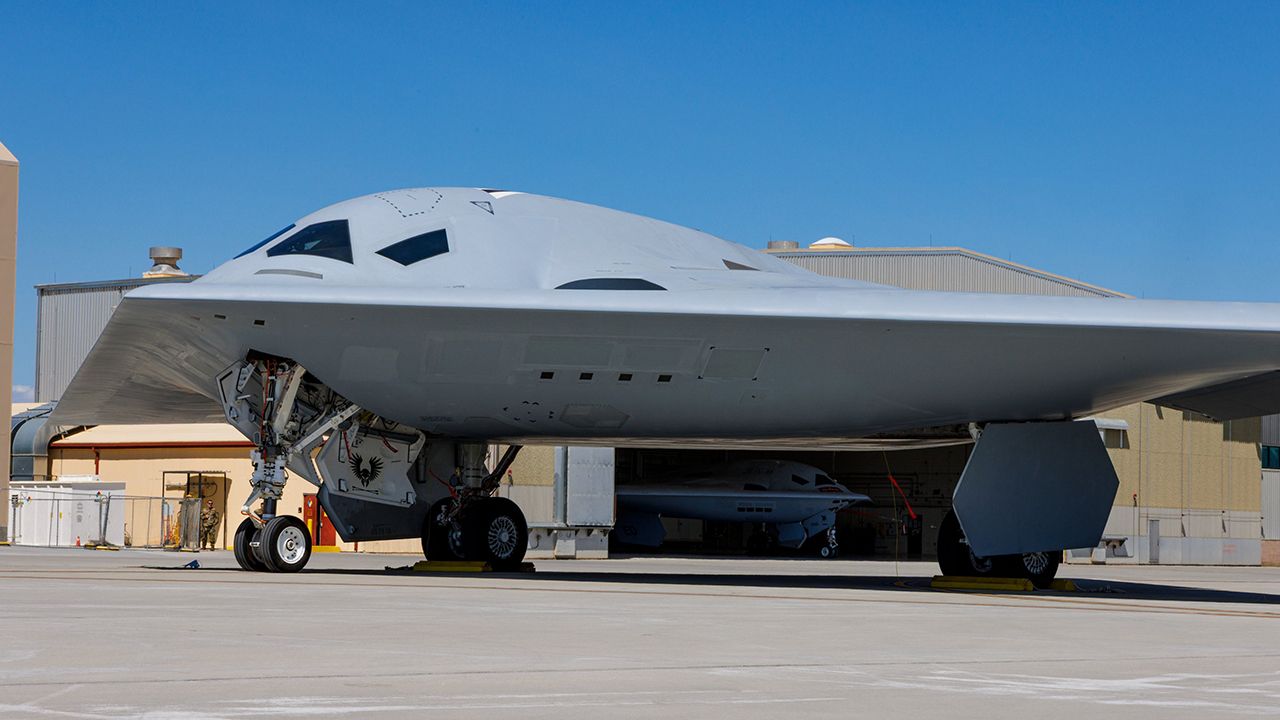
The Northrop Grumman B-21 Raider represents a significant evolution in US strategic bomber capabilities. As the US Air Force shifts toward more flexible and survivable operations, the B-21 addresses many limitations that constrained its predecessor, the B-2 Spirit. One of the most practical yet transformative advantages is the Raider’s ability to operate and remain parked outdoors overnight in varied environments. This capability aligns directly with modern Agile Combat Employment concepts and marks a departure from the B-2’s strict requirements for climate-controlled facilities. The difference stems from advances in materials, design philosophy, and lessons learned from decades of B-2 operations.
The B-2 Spirit’s Vulnerability to the Elements
The B-2 Spirit set the standard for stealth technology when it entered service. However, its pioneering flying-wing design and early low-observable coatings came with significant operational restrictions. The aircraft’s sensitive radar-absorbent materials and complex systems proved highly vulnerable to moisture, humidity, and extreme weather. A notable incident in February 2008 at Andersen Air Force Base in Guam highlighted these challenges. During a stopover caused by weather, heavy monsoon rains affected the B-2 Spirit of Kansas. The following day, moisture-related avionics issues led to a crash shortly after takeoff, destroying the aircraft. Both pilots ejected safely, though one sustained serious injuries.
Investigations revealed that exposure to water could damage low-observable surfaces and cause systems malfunctions if moisture accumulated in compartments. The Air Force noted that these sensitivities to moisture and climates were unlikely to be fully resolved even with improved materials. As a result, B-2 operations required dedicated climate-controlled hangars at its primary bases, such as Whiteman Air Force Base. Deployments were largely limited to a handful of specially equipped facilities, reducing operational flexibility and making the fleet more predictable to adversaries.
Design Advances Enabling Outdoor Operations
The B-21 Raider incorporates decades of operational data from the B-2 fleet along with modern digital engineering and advanced materials. Its stealth coatings and structural composites are far more resilient to environmental factors, including rain, humidity, and temperature fluctuations. These improvements allow the Raider to remain outside overnight or for extended periods without the risk of moisture-induced damage that plagued the B-2. Automated diagnostic systems and robust sensor designs further reduce the need for manual interventions in challenging conditions.
The B-21 is approximately 10 to 20 percent smaller than the B-2, with an estimated wingspan between 132 and 150 feet compared to the Spirit’s 172 feet. It features fewer engines and a reduced payload capacity of around 225,000 to 260,000 pounds versus the B-2’s over 330,000 pounds. These reductions contribute to lower weight, better aerodynamics, and decreased maintenance demands. The Raider requires roughly 30 percent less ground support infrastructure and a smaller crew, making it suitable for austere and forward bases.
Alignment with Agile Combat Employment Doctrine
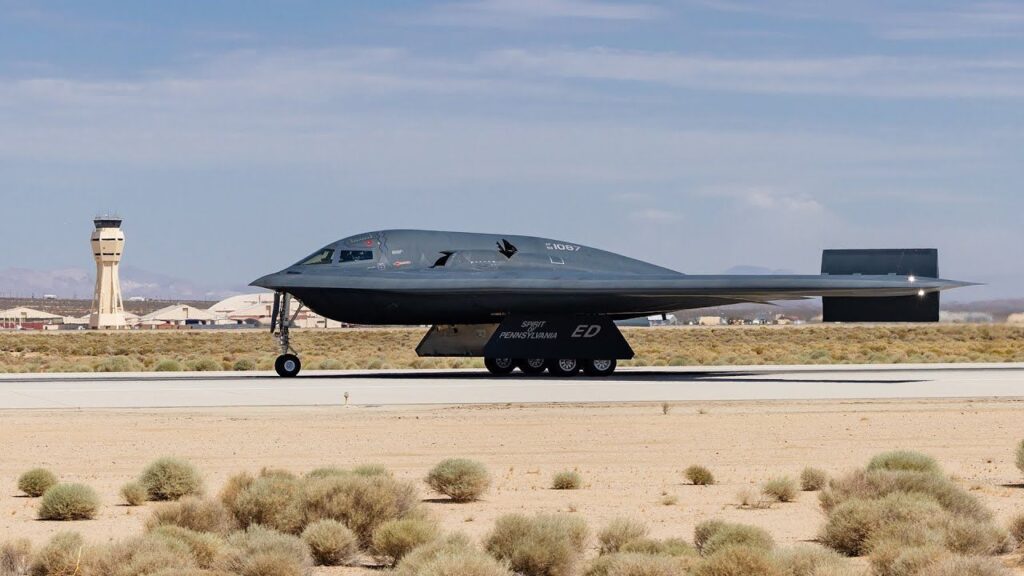
The US Air Force’s Agile Combat Employment strategy emphasizes dispersed operations across a wide network of bases to enhance survivability and unpredictability. The B-21’s design directly supports this approach. Unlike the B-2, which was largely confined to major hubs with specialized facilities, the Raider can deploy to smaller airfields, hardened shelters built for fighter aircraft during the Cold War, and allied bases in regions such as the Indo-Pacific. This flexibility reduces vulnerability on the ground and complicates enemy targeting efforts.
By operating from a broader range of locations, the B-21 fleet can reposition rapidly and maintain persistent presence across multiple theaters. A planned fleet size significantly larger than the B-2’s 19 operational aircraft further amplifies this advantage. Estimates suggest at least 100 Raiders, with some proposals calling for up to 145, creating redundancy and resilience that a small B-2 fleet could not achieve.
Maintenance and Operational Advantages
Maintenance on the B-2 was notoriously intensive, particularly for its low-observable features. The Raider benefits from improved materials that reduce the surface area requiring attention and simplify repairs. These enhancements are expected to yield a mission-capable rate exceeding 80 percent, compared to the B-2’s historical 50 to 60 percent range. Lower operating costs and reduced logistical footprint make the B-21 more sustainable for long-term high-tempo operations.
The Raider also integrates advanced data links and mission command capabilities. Its lighter weight and improved energy management may provide better agility, although primary focus remains on strategic strike roles. These attributes, combined with environmental resilience, position the B-21 as a more practical platform for real-world combat scenarios.
Comparison of Key Specifications:
| Feature | B-2 Spirit | B-21 Raider |
|---|---|---|
| Wingspan | 172 feet | 132-150 feet (est.) |
| Engines | 4 | 2 |
| Max Payload | Over 330,000 lbs | 225,000-260,000 lbs (est.) |
| Environmental Resilience | Requires climate-controlled hangars | Can park outside overnight |
| Fleet Size (Planned) | 19 operational | 100+ (target) |
| Mission Capable Rate | ~50-60% | >80% (projected) |
| Deployment Flexibility | Limited to major bases | Wide range of austere fields |
This table highlights the Raider’s practical improvements over the Spirit.
Strategic Implications for US Air Power
The B-21’s ability to operate without specialized hangars transforms bomber employment concepts. In a potential conflict with a near-peer adversary, the ability to disperse aircraft across numerous bases complicates enemy planning and enhances survivability. This dispersed basing reduces the effectiveness of preemptive strikes on concentrated airfields. The Raider’s design also eases pressure on existing infrastructure, allowing more efficient use of allied and forward locations.
Cost considerations further amplify these benefits. At roughly $700 million per unit compared to the B-2’s $2 billion, the Raider enables a larger fleet that supports sustained operations and industrial base health. This affordability, paired with reduced maintenance needs, ensures the Air Force can maintain a credible strategic deterrent without the extreme per-aircraft expenses that limited B-2 production.
Lessons from B-2 Operations
The 2008 Guam incident provided critical insights that shaped B-21 development. Issues with undocumented maintenance workarounds, poor documentation of system interfaces, and environmental sensitivities were addressed through digital engineering and built-in resilience. The Raider eliminates many of these vulnerabilities by embedding robustness into its core design rather than relying on operational mitigations. This approach minimizes unknown risks and improves safety and reliability in forward deployments.
The B-2 remains a vital asset with unmatched capabilities in certain scenarios. However, its limitations underscored the need for a more adaptable platform. The Raider builds upon the Spirit’s strengths while overcoming its operational constraints, creating a bomber force better suited to 21st-century threats.
Future Outlook for the Bomber Fleet
As the B-21 enters service, it will complement existing platforms like the B-52, B-1B, and remaining B-2s. The combination of a larger Raider fleet with improved deployability strengthens overall strategic posture. Ongoing testing and development continue to refine these capabilities, with emphasis on integration into joint operations and advanced networking.
The Raider’s design philosophy reflects a shift toward practicality without sacrificing stealth or lethality. Its ability to park outside overnight symbolizes broader advancements in military aviation, where resilience and flexibility become as important as raw performance. For the US Air Force, this translates to a more survivable, adaptable, and effective bomber force capable of projecting power in contested environments worldwide.
In an era of great power competition, the B-21 Raider’s operational advantages position it as a cornerstone of American airpower for decades to come. Its departure from the B-2’s infrastructure demands ensures that strategic bombers can truly operate from anywhere, enhancing deterrence and combat effectiveness on a global scale.